 reva
revaReseller Bookkeeping
Five fields per flip, four reports, fifteen minutes a week.
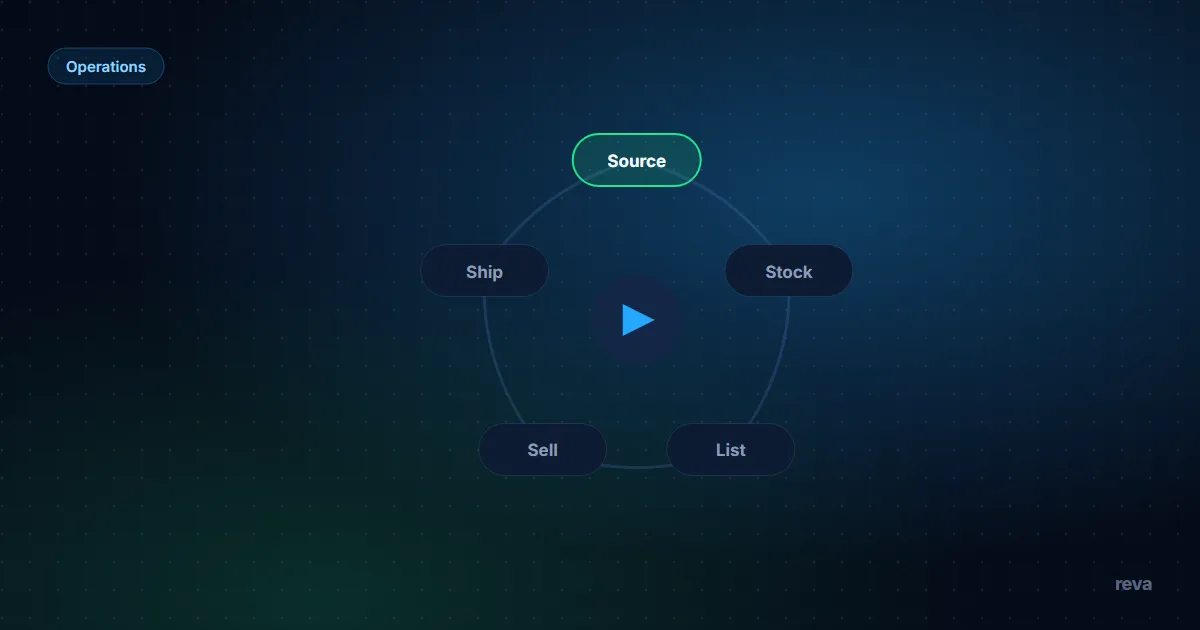
- Five fields per flip — item, buy cost, sale price, costs of the sale, dates — carry every report you need; profit, ROI and days to sell are arithmetic on those five.
- Four reports cover a reseller's decisions: profit per item, a monthly view, platform totals per calendar year, and the distance to the reporting line on each platform.
- Capture at the moment of the event, not in a Sunday session: a row opened on buy day is what makes the fifteen-minute weekly routine possible.
- DAC7 is reporting, not a tax: Vinted's pages put the line at at least 30 sales or over 2,000 € per calendar year, and Allegro counts Allegro and Allegro Lokalnie accounts together (official pages, 13 Sept 2026).
- Keep purchase proof, payout statements and the platform's DAC7 copy — the ledger you keep for yourself is also the evidence an adviser will ask for.
- The five fields every flip needs
- Your ledger in 15 minutes a week
- Reports 1 and 2: profit per item and the monthly view
- Reports 3 and 4: platform totals and the distance to the threshold
- What platforms report: DAC7 basics (checked 13 Sept 2026)
- Records to keep: receipts, payouts, fees
- When a spreadsheet stops being enough
- Related guides
Reseller bookkeeping is smaller than it looks: five fields per flip, four reports, about fifteen minutes a week. The reports tell you what to rebuy, what to drop, and how far you are from the sales levels platforms must report under DAC7. Below: a spreadsheet ledger, thresholds quoted from official pages checked on 13 September 2026, and tax treated as general information, not advice.
The five fields every flip needs
Everything a reseller later wants to know — profit, ROI, days to sell, which category to drop — is arithmetic on five fields. Capture them when they happen and the reports build themselves.
| Field | What goes in it | Example |
|---|---|---|
| Item | A code and a name you will recognise in six months | 2609-014 Levi's 501 W32 |
| Buy cost | Price paid plus extras: cleaning, repair, buyer-side fees | 25 zł + 3 zł cleaning |
| Sale price | What the buyer paid for the item itself | 89 zł |
| Costs of the sale | Marketplace fee plus shipping you paid yourself | 0 zł fee, buyer paid shipping |
| Dates | Bought, listed, sold, paid out | 2 Sept → 4 Sept → 19 Sept → 21 Sept |
Two rows get skipped in every messy ledger. The buy cost is what accountants call cost of goods sold and includes what you paid to acquire the item — buyer-side fees too (on vinted.pl the Buyer Protection fee is usually 5% + 2.90 zł, per the price list checked 13 September 2026; Vinted's updated terms take effect on 8 October 2026 in Poland, so recheck the price list when you close the year). Of the dates, only the paid-out one means the money is yours; the bought date starts your cash clock.
Your ledger in 15 minutes a week
The weekly session works only because capture happens elsewhere: buys get a row on buy day, sold items get prices, fees and dates when the money arrives. The session has one job: find the gaps.
- 1The flip happensBuy, list, sell — five fields captured at each event
- 2One row per itemFive fields land in one ledger row, keyed by the item code
- 3Sunday, 15 minutesFill gaps from listings and payout statements; close paid-out rows
- 4Four reportsProfit per item, monthly view, platform totals, distance to the threshold
If you would rather not build the columns yourself, the inventory and profit tracker (semicolon CSV for Polish Excel) opens correctly in Polish and most European Excel, and the comma version suits Google Sheets and English Excel. Columns A–Q run from item_id to notes, with example rows and empty rows carrying formulas for net payout, profit, ROI and days to sell. Monthly and DAC7 views are not in the file; build them by filtering rows by date, as below. Column layout and statuses are in the inventory spreadsheet template.
Reports 1 and 2: profit per item and the monthly view
Report 1 answers "what did this flip earn" and, read across rows, "what to stop buying":
Example rows (illustrative numbers, one per platform):
| Item | Buy cost | Sale price | Fee | Shipping you paid | Profit |
|---|---|---|---|---|---|
| 2609-014 jeans, Vinted | 28 zł | 89 zł | 0 zł | 0 zł | 61 zł |
| 2609-031 kettle, Allegro Lokalnie | 45 zł | 120 zł | 9.48 zł | 0 zł | 65.52 zł |
| 2610-002 lens, OLX | 210 zł | 320 zł | 0 zł | 12.99 zł | 97.01 zł |
The fee column comes from the platforms' own terms: Vinted's price lists show no seller commission; Allegro Lokalnie charges 7.9% on "Kup teraz" and auction sales (4.9% in Elektronika) — 9.48 zł on a 120 zł kettle. The 12.99 zł in the OLX row is a courier the seller chose to pay. Fees and buyer-side charges, marketplace by marketplace, are in the resale profit guide; the resale profit calculator runs it for one sale.
Report 2 is the same rows filtered by sale month: revenue, costs, profit and items sold, per category if you keep the column. It turns "this felt slow" into "jackets earned 610 zł across 9 sales; T-shirts 280 zł across 22". Filter by sale date for profit and by payout date for cash — they land in different months more often than you expect; reseller cash flow explains why.
Reports 3 and 4: platform totals and the distance to the threshold
Report 3 is two sums per platform, per calendar year: completed sales and money paid out. They answer which platform carries your volume — whose fee and rule changes can hurt you — and how far you are from the reporting line. The distance matters: the form, the deadline and the data should not surprise you in January.
Example: a platform showing 22 completed sales and 1,450 € equivalent paid out at the end of September is 8 sales or 550 € from the line — worth planning around in October, not discovering in a reminder.
What platforms report: DAC7 basics (checked 13 Sept 2026)
DAC7 is an EU directive, in force in Poland since 1 July 2024. The Ministry of Finance's summary is blunt in a useful way: it creates no new tax, sellers file nothing under it, and being reported does not mean an audit. Your job is to provide the identification data the platform asks for and keep your own totals so its report matches reality.
| Source (checked 13 Sept 2026) | Threshold | What else the page says |
|---|---|---|
| gov.pl, Ministry of Finance | A platform reports a seller with at least 30 sales or more than the equivalent of 2,000 € paid out in a calendar year (goods); below both, no report | Services, real-estate rental and transport rental are reported from the first transaction |
| Vinted (FR / DE / PL pages, and the UK page in €) | "at least 30 sales or earns over 2 000 €" in a calendar year | A short pre-filled form (add your tax ID) by around the start of January; you get a copy of what is reported; without the form you cannot sell or access the Vinted Wallet |
| Allegro | Data requested at the latest when a seller exceeds 2,000 € and/or 30 transactions in a calendar year | All accounts of the same seller count together across Allegro and Allegro Lokalnie; the report goes to Polish tax authorities by 31 January of the following year |
| OLX.pl Terms | — (the Terms implement the data duties) | Payouts are withheld if required DAC7 data is not provided within 60 days after at least 2 reminders |
Read the thresholds as "or", not "and": thirty cheap sales cross the line just as one expensive month does. Read them per platform — Allegro's count merges Allegro and Allegro Lokalnie, so one count covers both.
Whether those sales are taxable is a different question with a different answer per person — which is why this page stops at reporting. As general information for Poland: the occasional sale of a private item held over six months is not subject to income tax, while goods bought to resell are a different case; unregistered activity (działalność nierejestrowana) is capped at 10,813.50 zł of revenue per quarter from 1 January 2026, with CEIDG registration required within 7 days of exceeding it. None of this is tax advice — check gov.pl, podatki.gov.pl or an adviser; reselling without a registered business in Poland and DAC7 for resellers have the detail.
Records to keep: receipts, payouts, fees
The rows are the summary; the records behind them turn a row into evidence:
- Proof of purchase per row: receipt, screenshot of the listing you bought from, or transfer reference
- Payout statements per platform, saved by month
- Fee records: Allegro bills fees on the account, Vinted shows fee lines per order; courier receipts for parcels you paid for yourself
- The copy of each DAC7 report platforms send you, once you submit a form
- The four dates per row: bought, listed, sold, paid out — the last one closes the row
Sale date and payout date both matter: revenue belongs to the month the item sold, cash to the day the platform paid. A ledger that keeps both tells the truth about either.
When a spreadsheet stops being enough
Stay on the sheet while each item sells on one marketplace, the status system in the inventory management guide fits your weekly session, and gap-finding stays under fifteen minutes. Three things push past it:
- Crosslisting. One item live on two marketplaces makes a missed delist a double sale — a process problem first, a software question second.
- Time. When updating rows takes longer than listing new items, the sheet is paying you less than your listings do.
- An adviser's hour. Registering a business, crossing a reporting line or facing a VAT question means an accountant works from records — the five-field ledger keeps that hour short.
Even after you switch — to software, to an accountant, to both — keep the habit the sheet taught: capture at the event, close rows on payout, check totals against what platforms report. The tool changes; the five fields do not.
Related guides
Frequently asked questions
Do resellers need bookkeeping?
What records should a reseller keep?
What is DAC7 reporting for resellers?
How do I track profit per item reselling?
Sources
- gov.pl (Ministry of Finance): Co warto wiedzieć o dyrektywie DAC7 checked 13 Sept 2026
- Vinted Poland: DAC7 checked 13 Sept 2026
- Vinted France: DAC7 checked 13 Sept 2026
- Vinted Germany: DAC7 checked 13 Sept 2026
- Vinted UK: UK reporting requirements checked 13 Sept 2026
- Allegro Help: Seller data collected and reported under DAC7 checked 13 Sept 2026
- OLX.pl Terms (Regulamin), effective 27 April 2026 checked 13 Sept 2026
- biznes.gov.pl: Działalność nierejestrowana checked 13 Sept 2026
- podatki.gov.pl: Zbycie rzeczy ruchomej checked 13 Sept 2026
- Vinted Poland price list (cennik) checked 13 Sept 2026
- Allegro Help: Fees on Allegro Lokalnie checked 13 Sept 2026
See price estimates on live finds
This calculator needs your inputs. Scout estimates fair value, a fast-sell price and demand for the finds it shows you. Estimates, not guarantees.
reva estimates prices from public listings. Estimates, not guarantees.Keep reading
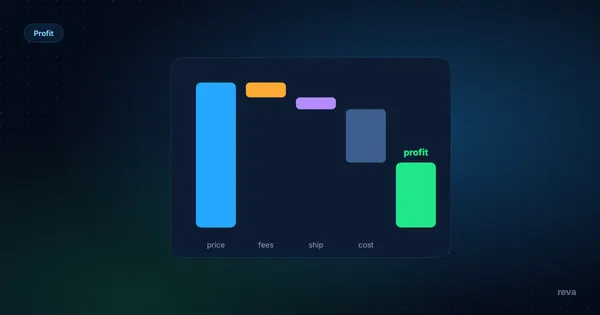
Work out what a flip really earns: cost of goods, marketplace and buyer fees, shipping, returns, promotions, ROI vs margin and tracking profit per item.
25 min read
What DAC7 means for resellers on Vinted, OLX and Allegro: the 30-sales or €2,000 trigger, what platforms collect, blocked payouts, and why it isn't a tax.
8 min read
Free resale profit calculator: enter buy price, sale price, marketplace fees, shipping and extras to see net profit, margin and ROI in zł, euros or pounds.
7 min read