 reva
revaCost of Goods Sold (COGS)
What an item really cost you, counted when it sells.
- Per item, cost of goods = purchase price + delivery to you + buyer fees paid when buying + cleaning, repair and parts. Selling fees, postage to buyers, packaging, promotions and subscriptions are operating costs.
- One test sorts most costs: would you have paid it if you had never listed the item? If yes and it belongs to one item, it is cost of goods; if you pay it only because you sell, it is a selling cost.
- COGS counts only items that sold in the period. Unsold stock stays at cost in your records until it sells or is written off, which is why a month of heavy buying can show healthy gross profit and little cash.
- Example: splitting a 177 zł lot evenly instead of by expected sale price turned a 50 zł shirt from 17 zł gross profit into a 5 zł loss. Choose the split rule before the first piece sells.
Cost of goods sold (COGS) for a reseller is what the items you sold cost you to get and make sellable: the price you paid, the delivery that brought them to you, any buyer fee on the purchase and the cleaning or repair they needed. It counts only items that sold in the period. Marketplace fees, postage to buyers, packaging and subscriptions are real costs, but they are operating costs, not cost of goods.
This page draws that line cost by cost, shows what happens to unsold stock and splits a lot in a worked example. The full profit method is in how to calculate reselling profit. Numbers are examples unless a source is named.
The COGS formula
Accounting counts cost of goods sold per period. Two routes lead to the same figure:
The first route suits a sheet with one row per item. The second works if you count stock once a month, but it quietly includes anything you binned, lost or gave away, so note write-offs as their own amount.
What goes in COGS and what doesn't
Ask of every cost: would you have paid this if you had never listed the item? If yes and it belongs to one item, it is cost of goods. If you pay it only because you sell, it is a selling cost. If you pay it whatever you buy or sell, it is overhead.
| Cost | Line | Why |
|---|---|---|
| Price you paid for the item | COGS | Acquiring it |
| Delivery that brought it to you | COGS | Acquiring it |
| Buyer fee on your purchase (e.g. Vinted Buyer Protection fee) | COGS | Charged on the purchase |
| Cleaning, repair, replacement parts | COGS | Made it sellable |
| Petrol or ticket for a trip made only for this item | COGS | Traceable to one item |
| Commission and fixed fees when it sells | Selling cost | Charged because it sold |
| Postage you pay to the buyer, return labels | Selling cost | Delivering the sale |
| Mailers, tape, printing | Selling cost | Shipping supplies |
| Bumps, highlights, listing packages | Selling cost | Paid to sell faster |
| Subscriptions, a sourcing trip for many items | Overhead | Paid whatever sells |
Vinted's updated Terms take effect on 8 October 2026 in Poland (5 October in Germany and France), and press reports say the Buyer Protection fee becomes the "Vinted fee". Log it by what it was, a fee you paid as a buyer, whatever it is called.
Moving a cost between lines never changes net profit on a flip. It changes gross profit, and it changes ROI, which divides by what you count as invested. Cleaning is the usual disagreement: the resale profit calculator takes it in Packaging, cleaning, other and divides ROI by Purchase cost only, while the reselling ROI calculator adds it to the base under Extra costs. ROI vs margin vs markup shows how far apart the two readings drift.
COGS and unsold stock
An item enters COGS in the month it sells, not the month you pay for it. Example: in September you spend 600 zł on stock and sell items that cost you 250 zł. September's COGS is 250 zł; the other 350 zł is still stock at cost, even though the cash is gone.
- Unsold at month end: keep its row with a blank sale date, as in the reseller inventory and profit tracker
- Returned and resellable: reverse the sale; the item goes back to stock at its original cost
- Binned, lost or given away: record the cost as a write-off so poor buys stay visible
- Cleared in a lot: its COGS is the sum of the pieces' own costs, not a new figure
When stock stops moving, how to liquidate unsold inventory covers the exits.
Worked example: splitting a lot
Lots and clothing bales arrive with one price for many pieces, so the split decides each item's cost of goods.
Split evenly at 55 zł each, the coat shows 113 zł gross profit and the shirt a 5 zł loss. Booking the whole 177 zł in September is worse: gross profit drops to 53 zł, and the jeans later look like pure profit. Decision rule: split mixed lots by expected sale price, near-identical pieces evenly, and never re-split after a sale.
Most of an item's cost of goods is fixed the moment you agree the price.
Why COGS matters for profit and tax records
- Gross profit = sales − COGS. It tells you whether you buy well, before any marketplace's fees blur it. The monthly profit and loss layout is in the reselling profit guide.
- Buying limits. A maximum buy price or ROI floor is only as honest as the cost of goods behind it.
- Tax records (Poland, general information, not tax advice). podatki.gov.pl works out income on a private item sold within six months (counted from the end of the purchase month) as revenue minus acquisition cost, plus outlays, filed on PIT-36. For unregistered activity, biznes.gov.pl describes PIT-36 on the tax scale with costs deductible. Neither page defines COGS for resellers, so ask a doradca podatkowy which of your costs count and what proof to keep. The rules are summarised in reselling in Poland without registering a business.
Frequently asked questions
Is shipping part of COGS?
Do marketplace fees count as COGS?
How do I split the cost of a bundle or bale?
Sources
- podatki.gov.pl: Zbycie rzeczy ruchomej (updated 19.08.2026) checked 13 Sept 2026
- biznes.gov.pl: Działalność nierejestrowana (updated 05.05.2026) checked 13 Sept 2026
- Vinted Poland Terms (version in force, with update notice) checked 13 Sept 2026
- Value Added Resource: Vinted Europe terms update, October 2026 checked 13 Sept 2026
Start with reva
One place to find underpriced items, check their market value and act before someone else does.
reva estimates prices from public listings. Estimates, not guarantees.Keep reading
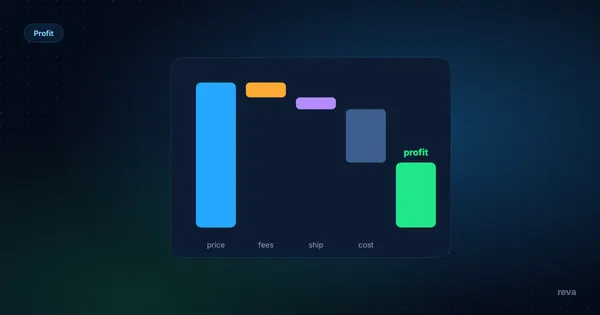
Work out what a flip really earns: cost of goods, marketplace and buyer fees, shipping, returns, promotions, ROI vs margin and tracking profit per item.
25 min read
Free resale profit calculator: enter buy price, sale price, marketplace fees, shipping and extras to see net profit, margin and ROI in zł, euros or pounds.
7 min read
Free reseller inventory and profit tracker spreadsheet for Sheets and Excel: profit, ROI and days to sell per item, plus Poland limit and DAC7 views to add.
7 min read