 reva
revaDo You Pay Tax Selling on Vinted in the UK?
Clearing out your wardrobe and buying to resell are taxed differently. HMRC's own guidance draws the line.

- Selling personal items you owned for personal use is generally not taxable — HMRC says you're unlikely to pay tax on items from your home.
- If you buy items specifically to resell at a profit, you're likely trading and must pay tax on your profit.
- The £1,000 trading allowance means income at or below this threshold generally requires no action; above it means registering for Self Assessment.
- Vinted UK reports sellers with 30+ sales or earnings over €2,000 (about £1,700) — meeting these thresholds does not mean you owe tax.
- Keep records of purchase prices, fees and postage for every item to calculate real profit if needed.
If you sell occasionally on Vinted in the UK, you probably do not need to pay tax. HMRC treats selling personal belongings differently from running a business — the key is whether you are trading (buying to resell) or simply clearing out personal items. Our resale profit guide covers how to calculate what you actually earn after all costs. Below is what the UK tax rules actually say, based on gov.uk pages checked on 14 September 2026.
This page covers personal items, trading, the £1,000 allowance, platform reporting by Vinted and when to register for Self Assessment. It is general information, not tax advice — for your specific situation, consult a tax professional.
Personal items: when you are unlikely to pay tax
HMRC's own guidance is clear: you're unlikely to pay tax if you sell personal items from your home, like contents of a loft or garage. The items must be things you owned for your own use, not bought with the intention of selling them for profit.
If you sold a winter coat for £25 that you bought three years ago for £40, there's no gain — you sold it for less than you paid. Tax is on profit, so if there's no profit, there's nothing to tax. This applies even if you sold dozens of personal items over the year.
The distinction matters: selling your own used clothes, furniture or electronics you no longer need is generally not a taxable event. HMRC does not require you to report these sales unless specific conditions apply (see Capital Gains Tax below).
Trading: when reselling becomes taxable
If you buy or make goods to sell at a profit, HMRC says you are likely trading and will have to pay tax on your profits. The difference between a private seller and a business seller matters for tax purposes. This is the critical distinction:
- Personal use items → unlikely to be taxed
- Bought to resell → likely trading → taxable profit
A few clear signs you may be trading:
- You regularly buy items specifically to resell them
- You spend significant time sourcing, repairing or preparing items for sale
- You have a business-like approach (records, consistent pricing, repeat sales)
When you are trading, tax is on your profit, not the sale price. Your costs (what you paid for the item, fees, postage, packaging) reduce the amount that counts as taxable profit.
The resale profit calculator shows real profit per item after marketplace fees and shipping costs — use it to understand what you actually earn before tax applies.
The £1,000 trading allowance
The UK offers a trading allowance of up to £1,000 per tax year. This is a tax-free allowance for trading income, separate from the personal allowance for employment.
Key points:
- At or below £1,000 — you generally do not need to tell HMRC. There are exceptions for certain partnerships or if you've received other income taxed at source, but for most casual sellers, no action is required.
- Above £1,000 — you must register for Self Assessment and report your trading income. You can still deduct allowable expenses (cost of goods, fees, postage, packaging).
- Tax year — runs from 6 April to 5 April. The allowance resets each year.
The allowance is per person, not per platform. If you sell on Vinted, eBay and Depop combined and total under £1,000 profit, you generally do not need to register.
Platform reporting: what Vinted sends to HMRC
Under UK rules (similar to the EU's DAC7 rules), digital platforms must report seller information to HMRC when certain thresholds are met.
Vinted UK reports sellers who have:
- At least 30 sales in a calendar year, or
- Received payments totalling more than €2,000 (about £1,700)
When reporting, Vinted collects and sends:
- Full name
- Address
- Date of birth
- Tax identification number (National Insurance number)
Important: Meeting these thresholds does not mean you owe tax. HMRC receives a report of your activity, but whether you owe tax depends on whether you made a profit and whether that profit exceeds your allowance. Vinted's own guidance states: "Meeting these requirements doesn't mean you have to pay taxes on your Vinted sales. In general, selling personal items on Vinted is not taxed."
You receive a copy of any report sent to HMRC. Vinted's updated Terms take effect on 8 October 2026 — check the UK reporting page for any changes.
eBay follows similar reporting rules. If you sell on multiple platforms, each counts separately toward its own threshold. For a UK-focused overview, see our guide on reselling in the UK. For eBay UK specifically, see our eBay UK fees page.
- 1Did you buy items specifically to resell them?If no → personal items, likely not taxable. If yes → probably trading.
- 2Is your total trading profit over £1,000 this tax year?If no → generally no tax to pay. If yes → register for Self Assessment.
- 3Did Vinted report you?Reporting thresholds (30 sales or €2,000) are NOT a tax bill — they mean HMRC gets your data, not that you owe tax.
- 4Did you sell a single item for over £6,000?If yes → check Capital Gains Tax rules for personal items.
Capital Gains Tax on valuable personal items
Most personal items are not subject to Capital Gains Tax (CGT). However, there is an important threshold: if you sell a single item (or a set of items sold together) for more than £6,000, you may need to report it.
Key points:
- CGT generally applies to assets that increased in value — personal belongings sold for less than you paid are not CGT assets
- The £6,000 threshold is the value of the item or set at the time of sale
- Sets of items (for example, a matching jewellery set) count together
- Your total CGT annual allowance is currently £3,000 — gains above this may be taxed at 10% (basic rate) or 20% (higher rate)
For most Vinted sellers, this threshold is irrelevant — most items sell for under £100. But if you sell designer items, collectables or valuable electronics for significant amounts, check whether CGT applies.
Records to keep and when to register for Self Assessment
If you may owe tax, good records make Self Assessment straightforward:
Keep for each sale:
- What you paid for the item (receipt or estimate if no receipt)
- Marketplace fees deducted
- Postage and packaging costs
- Date bought and date sold
Register for Self Assessment if:
- Your trading profit exceeds £1,000 in the tax year
- HMRC sends you a notice to file
- You have other income that requires declaration
Register at gov.uk — the deadline is usually 5 October after the tax year ends. File by 31 January.
Simple bookkeeping for resellers helps you track real profit, not just revenue. Even if you are below the allowance, keeping records means you can prove your position if HMRC ever asks.

This page is part of our resale profit guide. For understanding what counts as your true cost, see landed cost.
Frequently asked questions
Do I pay tax on selling my old clothes on Vinted in the UK?
What is the £1,000 trading allowance?
Will Vinted send my details to HMRC?
When does a UK reseller need to register for Self Assessment?
Sources
- HMRC: Check if you need to tell HMRC about your income from online platforms checked 14 Sept 2026
- HMRC: Selling goods or services on a digital platform checked 14 Sept 2026
- HMRC: Reporting rules for digital platforms checked 14 Sept 2026
- HMRC: Tax-free allowances on property and trading income checked 14 Sept 2026
- Vinted UK: UK reporting checked 14 Sept 2026
Start with reva
One place to find underpriced items, check their market value and act before someone else does.
reva estimates prices from public listings. Estimates, not guarantees.Keep reading
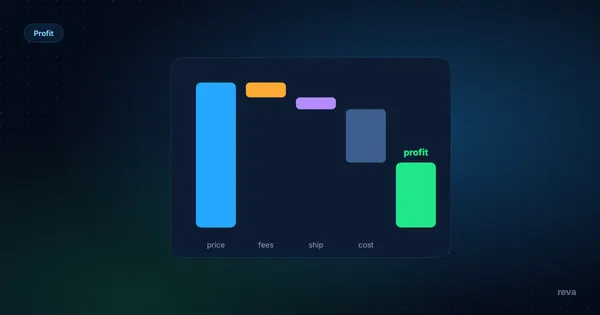
Work out what a flip really earns: cost of goods, marketplace and buyer fees, shipping, returns, promotions, ROI vs margin and tracking profit per item.
25 min read
Reselling in the UK: which platforms are free for private sellers, when you become a trader, Vinted Pro rules, eBay and Depop fees and how payouts work.
10 min read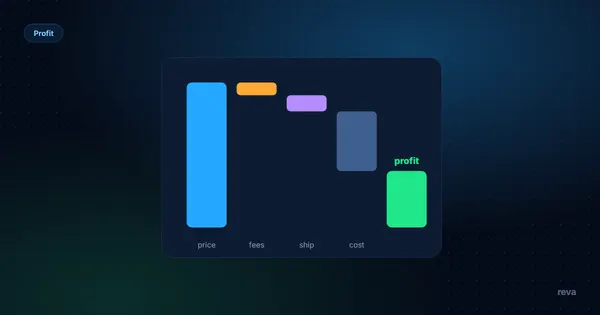
What DAC7 means for resellers on Vinted, OLX and Allegro: the 30-sales or €2,000 trigger, what platforms collect, blocked payouts, and why it isn't a tax.
8 min read