 reva
revaWhat Is Card Grading?
A grade can multiply a card's price or just add a fee and months of waiting. The definition, the published costs and a quick break-even check.
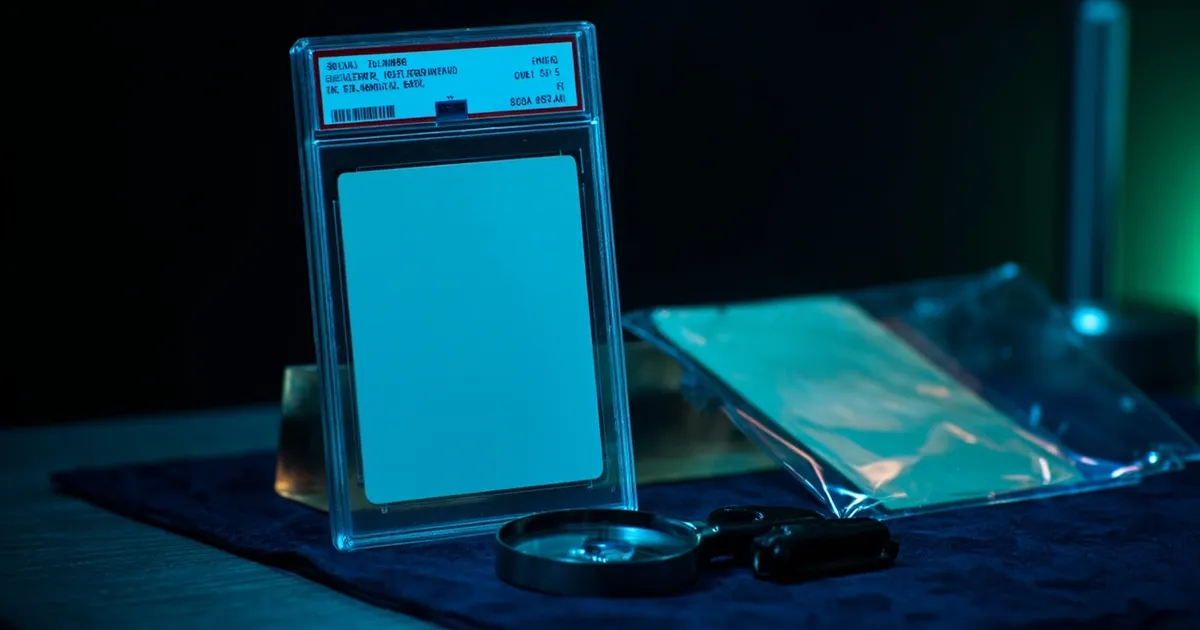
- Card grading verifies authenticity and condition, sealed in a labelled plastic slab with a numeric grade.
- PSA publishes its fee schedule online; BGS and CGC pricing was not verified for this page.
- The break-even check: price gap between graded and raw comparables must exceed grading fee plus shipping, insurance and waiting time.
- Graded and raw cards trade in different markets — link to trading-cards-resale for pricing both.
- Grading certifies condition, not value; a high grade does not guarantee a higher selling price.
Card grading is a paid service in which a company checks a trading card's authenticity, rates its condition on a numbered scale and seals it in a labelled plastic case called a slab. The three major graders are PSA, Beckett (BGS) and CGC — each uses a 1–10 scale where 10 means pristine. This page explains what grading costs, when it pays off and how graded and raw cards differ as markets. For resellers, this fits into the broader product-sourcing-guide framework for evaluating inventory decisions.
The three major grading companies
PSA (Professional Sports Authenticators) is the largest by volume, grading millions of cards annually across sports, non-sports and gaming categories. Its slab is the most recognisable in the secondary market.
BGS (Beckett Grading Services) is known for its subgrades — four separate scores for centering, corners, edges and surface, plus a final grade. A BGS 9.5 Gem Mint with all subgrades at 9.5 or higher is considered the equivalent of a PSA 10 in many circles.
**CGC started as Certified Guaranty Company, originally focused on comics, and later expanded into trading cards. Its grading standards are similar to PSA's single-number approach.
Only PSA's published fee and turnaround schedule was verified for this page. BGS and CGC pricing must be checked directly on their websites.
What grading costs — PSA published rates
PSA publishes its fee schedule on its pricing page. The following tiers were listed as of 14 September 2026, in US dollars:
The Regular tier covers cards with a declared value up to $1,500, with an estimated turnaround of 70–80 business days. Express ($199) covers up to $2,500 and promises 20–30 business days. Super Express ($349) covers up to $5,000 with 10–15 business days. Walk-Through ($599) covers up to $10,000 and aims for 7–10 business days. Premium tiers start at $999 for higher-value cards with an estimated 5–7 business day turnaround.
PSA states that estimated turnaround times are estimates only and not guaranteed. Prices are in US dollars and may change.
Beyond the grading fee, budget for one-way shipping to the grader's submission centre, insurance during transit, and the time the card spends waiting. For example, say you use the Regular tier — expect roughly 2–4 months before the card returns. If selling on a platform that charges seller fees (such as Catawiki's 12.5% commission), factor that into the total cost. Before paying for grading, verify the card's authenticity yourself using the authentication-checklist.
When grading pays off — the break-even check
Grading only makes financial sense when the price gap between comparable graded and raw cards exceeds your total out-of-pocket cost:

The waiting time matters too. If you tie up capital for three months at the Regular tier, consider the opportunity cost. Meanwhile, market prices can shift — PSA explicitly notes that turnaround estimates are not guaranteed, meaning your card might take longer than expected. Tracking which cards gain value over time helps with inventory decisions, as covered in resale-trends.
For example, say a raw card of a popular player trades at roughly 400 zł on Vinted or Allegro Lokalnie. A PSA 10 version of the same card might sell for 650 zł on a dedicated card market. The gap is 250 zł. If grading (roughly 300 zł including shipping to the US and back) exceeds that gap, grading loses money.
For example, cards in the 50–200 zł raw range rarely benefit from grading unless they are exceptionally rare variants.
Graded vs raw — two different markets
Graded cards and raw (ungraded) cards trade in separate markets with different buyer pools. Collectors seeking graded cards often prioritise the assurance of a third-party grade and are willing to pay a premium. Raw cards appeal to budget-conscious buyers or those who plan to grade themselves.
Pricing strategies for both are covered in trading-cards-resale, which walks through how to research and price each type.
Related terms
- deadstock — another collector term for unsold inventory
- comparable sale — the basis for pricing any card, graded or raw
Frequently asked questions
How much does PSA charge to grade a card?
When is grading a card not worth the cost?
What do PSA, BGS and CGC stand for?
Does a high grade guarantee a higher resale price?
Sources
- PSA pricing page checked 14 Sept 2026
- Catawiki seller fees checked 13 Sept 2026
Analyze an item with reva
Open any find and see its five-level price ladder, demand score and price confidence, built from comparable items that left the market. Estimates, not guarantees.
reva estimates prices from public listings. Estimates, not guarantees.Keep reading
Where resellers find stock and how to judge it: online listings, second-hand shops, bales, alerts, buying rules, demand checks and fake detection.
25 min read
What deadstock means in reselling: unworn, original-condition items (DS) vs 'dead stock' that never sold, and how the word affects pricing and wording.
4 min read
How to spot resale trends early: Google Trends read correctly, listing counts over time, social mentions, a three-item test, and signs of the end.
6 min read