 reva
revaComparable Sale (Comp)
A price estimate is only as good as its worst comp.

- A comparable sale is an outcome: a completed sale of an item matching yours on model, condition, completeness, channel and recency.
- The five match criteria in order of strictness: model first, then condition, completeness, channel and recency — a mismatch on model or channel disqualifies the sale.
- Asking prices are not comps; they are unsold claims and often sit above what anything actually leaves the market at.
- Three to five clean comps beat thirty loose ones; with three, quote the middle value and treat a wide spread as a warning.
- Adjust for condition and completeness with a written rule, and if the adjustment passes about 20% of the price, find better comps instead.
A comparable sale — a comp — is a past sale of an item similar enough to yours that its price counts as evidence for what yours is worth. The skill is not collecting many: three clean comps beat thirty loose ones, because every mismatch quietly moves the number you will end up asking.
Below: the five match criteria, why asking prices do not qualify, and how to adjust the comps that are only nearly right.
What is a comp in reselling?
A comp is one data point: one item, one buyer, one day. That single sale could have been lucky or desperate, which is why pricing never rests on one. What makes a sale comparable is similarity on the things buyers pay for — the exact model, the state it is in, what came with it — and similarity of situation: same kind of marketplace, same country, recent enough that the price still means something.
Example: a used camera body sold with a kit lens is not a comp for the same body sold bare. The lens is part of what the buyer paid for.
The five match criteria
Score every candidate sale against all five before it enters your evidence:
| # | Criterion | Match on | A mismatch looks like |
|---|---|---|---|
| 1 | Model | Exact model, variant, size where it matters | Same brand, previous year's version |
| 2 | Condition | Same grade of wear | New with tags against visibly worn |
| 3 | Completeness | Box, accessories, working parts | Missing charger, caps or dust bag |
| 4 | Channel | Same marketplace type and country | Local pickup market against a shipped national platform |
| 5 | Recency | Recent weeks, not seasons ago | A sale from 14 months ago |
A failure on model or channel disqualifies the sale — drop it. Failures on condition, completeness or recency can be adjusted, which is the next two sections.
Asks are not comps: the most common mistake
An asking price is a claim by a seller who has not found a buyer; a comp is an outcome. On most marketplaces what you see first is asks, and unpriced stock often sits for weeks before the cut that sells it. Use asks to spot a bargain; use exits to price what you hold.
On platforms that publish completed sales, filter for those first — there "sold" is the right word. On Vinted and OLX you mostly see listings vanish, which is why reva prices from items that left the market rather than from asks. Both habits are covered in Vinted sold prices and how to find sold comps.
How many comps an estimate needs
Worked example: pricing a used lens. Three comps pass all five criteria: 420 zł (like new, boxed), 380 zł (good), 350 zł (good, no caps). Yours is good, no caps. The middle value, 380 zł, is the starting estimate; the 350 zł comp is the closest match, so a listing near 360–380 zł is defensible. The spread, 70 zł, is about a sixth of the price — tight enough to trust.
Rule: three to five clean comps. A wide spread means the group is describing different items, not one market.
Adjusting when comps are imperfect
Adjustments need a written rule you could say out loud to a buyer: "boxed copies sell about a tenth above bare ones in this category, so a no-box comp at 420 zł reads as roughly 382 zł bare." Move the number in the direction of your item's weakness, never both ways.
Two limits keep this honest. First, adjust conservatively and round against yourself. Second, if the total adjustment passes about a fifth of the price, the sale is not comparable — search again. Condition grades and their price effects are in how to price by condition.
Related terms
A comp supplies one price; an estimate needs several plus a rule for combining them, which is the job of fair market value. Summaries of whole groups of sales, and the traps of averaging them, are under average selling price. The parent method — where pricing evidence sits in a full pricing workflow — is the resale pricing guide.
Related guides
Frequently asked questions
What does comps mean in reselling?
Do asking prices count as comps?
How many comps do I need to price an item?
What if I can only find comps in worse condition?
Analyze an item with reva
Open any find and see its five-level price ladder, demand score and price confidence, built from comparable items that left the market. Estimates, not guarantees.
reva estimates prices from public listings. Estimates, not guarantees.Keep reading

How to price used items for resale: comps from sold and live listings, condition, price levels from fast sale to max profit, markdowns, offers and bundles.
21 min read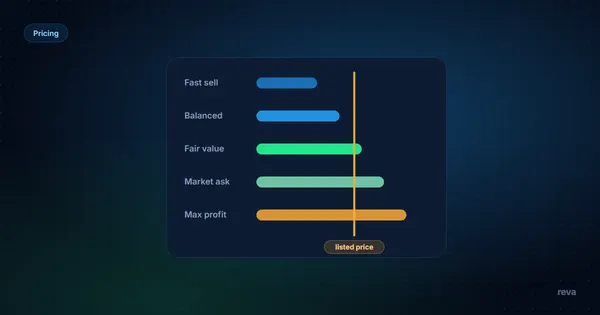
What sold comps are and how to find them on Vinted, OLX and Allegro Lokalnie with no sold filter: match brand, size and condition, and how many you need.
9 min read
Can you see sold prices on Vinted? What the app shows, why 'sold filter' tips conflict, and honest ways to estimate what similar items went for.
9 min read