 reva
revaFair Market Value
The price a willing buyer and seller agree on — with time to wait.

- Fair market value is the price of a sale between a willing buyer and seller, neither forced to act — patience is built into the term.
- Estimate it from exits, not asks: the middle price of comparable items that left the market, not the dearest listing still standing.
- Urgency moves the price, not the item: quick sale, fair value and maximum ask are honest prices of the same thing at different speeds.
- In the example ladder, fair value of 64 zł sits between a 48 zł quick-sale price and a 72 zł market ask, with max profit capped at 80 zł (fair value × 1.25).
- For insurance, tax or disputes, the authority involved may define value its own way — general information only, check the official rules that apply to you.
Fair market value is the price an item would reach between a willing buyer and a willing seller, neither forced to act. For second-hand resellers it is best estimated from prices of similar items that actually left the market — not from the dearest listing still standing.
Below: why the "no pressure" part matters, how to estimate the number, and where it sits on a price ladder.
The definition, in plain words
The term comes from valuation: an open market, two parties who each could walk away, and a price they would actually agree on. Every word does work. "Open" means a real market with other buyers around, not one desperate bidder. "Willing" rules out sales made under deadline, debt or moving day. For tax or legal questions, the authority involved may define value differently — this page is general information, and the official rules of your country win.
Why "no pressure" matters: the patience spectrum
Pressure is a discount. A seller who needs cash today accepts less than one who can wait a month, so prices extracted under pressure understate the market. The same jacket therefore has several honest prices at once, and the difference between them is time, not quality:
How resellers estimate it: exits, not asks
An asking price is a claim made before anyone agreed to anything; an exit is an outcome. Where a platform publishes completed sales, filter for them — "sold" is the correct word there. Where it does not, count listings that disappeared and say "left the market", because a vanished listing can also be a withdrawal.
The gathering step is the same either way: match on model, condition and completeness first, as finding sold comps describes.
Fair value on the price ladder
Fair value sits in the middle of the ladder on purpose: it prices a patient sale without assuming luck. The levels above it are increasingly impatient claims — market ask, then a maximum around fair value × 1.25, past which you are pricing for a buyer who never compares. The levels below trade price for speed, which is the territory of a quick sale price. The full five-level ladder and how to pick a level is in the price ladder guide.
Where FMV matters beyond pricing
The same estimate serves three side jobs. Insurance claims after damage or loss usually want a replacement value — the insurer's rules decide which. Disputes and chargebacks go better when you can show exits rather than your own ask. And valuing stock for records or tax uses whatever basis your accountant or the official rules require — general information only, not advice; for Poland start at gov.pl, for the UK at HMRC. How fast items actually turn into cash near that value is the neighbouring idea of market liquidity.
Related terms
The estimate itself is built from comparable sales, and the whole workflow around them — evidence, levels, markdowns — lives in the resale pricing guide.
Related guides
Frequently asked questions
How do I find the fair market value of a used item?
Is fair market value the same as asking price?
What is the difference between fair value and quick sale price?
Why does FMV assume a patient sale?
Analyze an item with reva
Open any find and see its five-level price ladder, demand score and price confidence, built from comparable items that left the market. Estimates, not guarantees.
reva estimates prices from public listings. Estimates, not guarantees.Keep reading

How to price used items for resale: comps from sold and live listings, condition, price levels from fast sale to max profit, markdowns, offers and bundles.
21 min read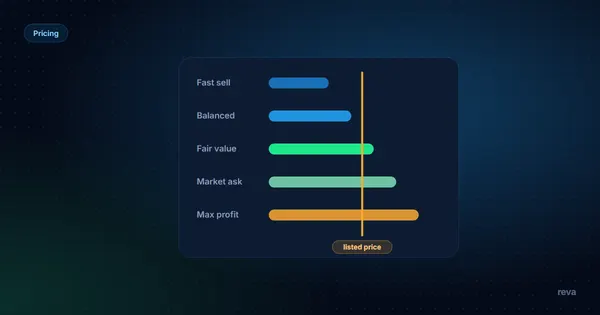
Five price levels, from fast sell to max profit, what each is based on and when to choose it depending on cash needs, demand and how long you can wait.
8 min read
Estimate a quick-sale price for a second-hand item from the asking prices you see, then check it against your break-even so a fast sale isn't a loss.
6 min read