 reva
revaSKU Numbers for Resale Items: Build a Code You Can Read
One short code per item that ties the physical tag, the photos, the spreadsheet row and every listing together.
- A SKU only needs to do two things: let you find the physical item, and match a sale to what you paid for it.
- A simple format is date bought + source code + sequence number, for example 2609-LU-014 — our suggested format, not an official standard.
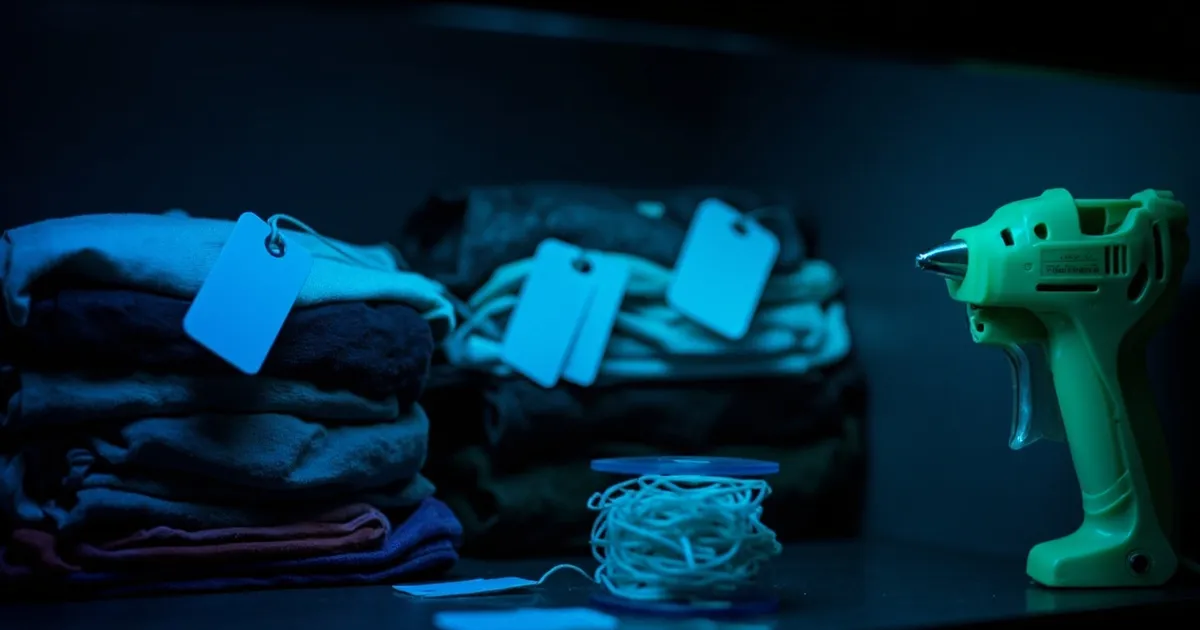
- Tag clothes through the care label with a fastener gun, or with a safety pin through a seam allowance; never through visible fabric.
- The same code should appear in the photo file names, the item_id column of your inventory sheet, and, if you use one, the listing's private notes.
- Vinted's rules ban external links and references in a listing but don't say whether a short internal code in the description is treated the same way — keep it short and at the end, or leave it out of the listing entirely.
Once you're past a handful of items, "the blue jacket" stops being a useful way to find anything in your stock. A SKU — a short code on the item, in your photos and in your sheet — solves that without needing barcode software. This page covers only the code format, how to tag items without damaging them, and how one code follows an item through photos, spreadsheet and listing; it's part of the inventory management guide.
Why one-off items still need a code
Every item you resell is unique, so you can't rely on a shared product code the way a shop selling the same T-shirt fifty times can. What you need instead is a way to answer two questions fast: which physical item is this listing, and what did I pay for it?
Without a code, both questions mean scrolling through a spreadsheet looking for a description that roughly matches a photo. With a code, you type it once — on the photo file name, in the sheet, maybe in a private note — and it answers both questions instantly, including weeks later when a buyer messages about a sale you've half-forgotten.
Anatomy of a code: date, source, sequence
A workable format has three parts: when you bought it, where you got it, and a running number for that batch. For example, 2609-LU-014 reads as September 2026, "LU" for lumpeks, item 14 that month.
Keep the source codes short and consistent — two or three letters per channel you buy from (say, LU for lumpeks, OLX for an OLX purchase, EST for an estate sale) — and reuse the same list every month so you're not inventing new abbreviations later. Two rules keep the format usable:
- No spaces, so it works as a plain file name and a spreadsheet value
- No Polish letters (ą, ę, ł, etc.) — plain ASCII survives every export and every marketplace's text field
- Fixed-width numbers (014, not 14) so the sequence sorts correctly as text
Tagging items without damaging them
How you attach the code depends on the item, and the goal is always the same: removable without a mark.
- Clothes: a small paper swing tag through the care label seam with a fastener gun, or on a safety pin through a seam allowance — never through visible fabric
- Shoes: a string tag looped through the laces or inside the box, not stuck to the material
- Electronics: a removable paper or masking-tape label on the box or a non-screen surface, never on the device's screen or a painted finish
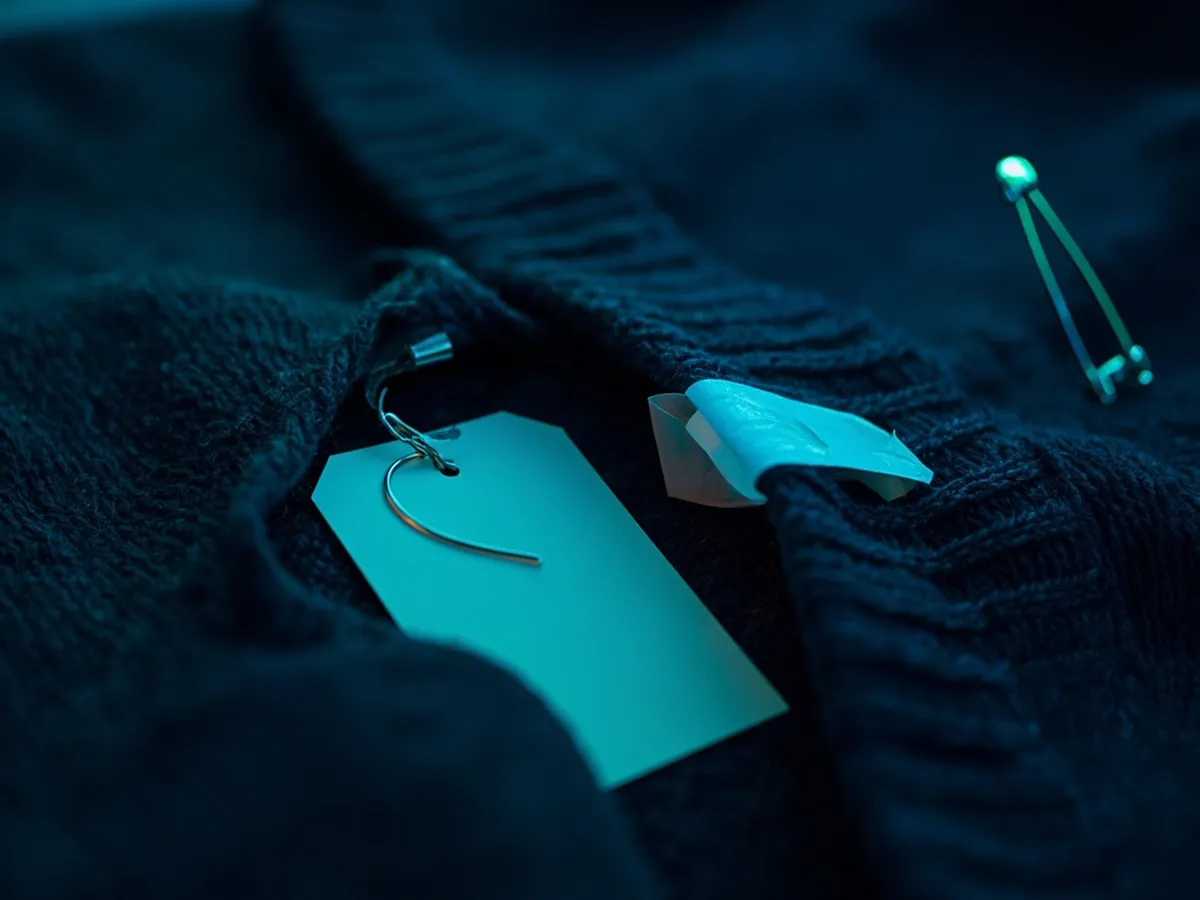
The tag only needs to carry the code itself — a blank tag with the code written or printed on it is enough. You don't need a barcode or a scanner to make this work at one-person scale; as of 13 September 2026, some crosslisting tools (List Perfectly and Vendoo among them) list a built-in SKU generator or printable labels as a paid feature, if you'd rather not build the format by hand.
One code across photos, spreadsheet and listing
The same code should follow the item everywhere you record it, starting with the item_id column in our free inventory spreadsheet template:
- Photo file names: prefix every photo of the item with its code, for example 2609-LU-014-1.jpg, -2.jpg
- Spreadsheet: the code goes in the item_id column, followed by item, category, marketplace, buy_date, buy_price_zl and the rest through to notes
- Listing: optionally in the private notes field if the marketplace has one, or at the very end of the description
On the listing itself, be careful: Vinted's Catalogue Rules say listings can't contain links or references to external sites. That rule is about links, and Vinted's help pages don't specifically address a short internal code like 2609-LU-014 sitting in a description — this page can't tell you whether it helps, hurts, or does nothing for search, because that's simply not stated. The safe default is to keep it short, put it at the very end if you use it at all, or skip the listing and keep the code only in your own sheet.
When the same item is listed on two marketplaces
Crosslisting means the same physical item can sit on Vinted and OLX at once — until one sells. Use the identical code on both listings' private notes or your own tracking, so when a sale notification comes in from either platform, you know immediately which sheet row to update and which other listing to take down.
You've just seen how many places one item's code needs to live — a photo file name, a sheet row, maybe a listing note. reva is building Stock, a place to keep items, codes and costs next to your listings; it isn't usable yet. Today, reva Scout and Buy are live and help with finding and pricing, not with tracking what you already own.
OLX's terms treat ending and relisting the same item within 14 days as a duplicate, which is one more reason a single consistent code — not a fresh one each time you relist — matters: it's how you prove to yourself it really is the same item, not a new listing under a new number. For the delisting routine itself, see avoiding double sales across marketplaces, which this page won't repeat.
Mistakes that break the system
A code system fails quietly, usually months after you set it up:
- Reusing a code after an item sells — breaks the link to that item's sold history
- Encoding the price into the code itself — prices change before a sale, codes shouldn't
- Codes longer than 8-10 characters — slower to type onto a tag or a file name, more room for typos
- Handwritten tags nobody but you can read — a helper or a future you needs to read it too
If you batch-tag a session's worth of purchases at once, see the batch listing workflow for how a tagging pass fits into the wider listing session.
Code format checklist
- Pick a 2-3 letter code for each sourcing channel you use regularly
- Write the code as YYMM-SOURCE-SEQUENCE, sequence padded to 3 digits
- Tag the physical item the moment you log it, not later
- Name every photo of the item with the code as a prefix
- Enter the code in your sheet's item_id column before you photograph
- Never reuse a code, even for an unsold item you're relisting
Where the item physically lives — which bin, which shelf — is a separate system from the code itself; see storage and location codes for resellers for bins and shelf labelling, and spreadsheet vs. a dedicated inventory app for when a spreadsheet like the one above stops being enough on its own.
Frequently asked questions
What should a SKU for a second-hand item contain?
Should I put the SKU in the listing description?
How do I tag clothes without damaging them?
Can I reuse a SKU after an item sells?
Sources
- List Perfectly pricing (inventory features) checked 13 Sept 2026
- Vinted UK Catalogue Rules checked 13 Sept 2026
- OLX Poland Terms, 27 Apr 2026 checked 13 Sept 2026
Open your reva workspace
Start with what works today: priced finds, buying rules and a watch list. Stock, Inbox and Money are in build and will join the same workspace.
reva estimates prices from public listings. Estimates, not guarantees.Keep reading
Inventory management for one-off resale stock: SKUs, storage, cost and listing status, sell-through and turnover, aged stock rules, shipping and returns.
21 min read
A home storage system for resellers: bin numbering, label conventions, a location field in your sheet, picking without errors, and scaling up.
8 min read
Free reseller inventory and profit tracker spreadsheet for Sheets and Excel: profit, ROI and days to sell per item, plus Poland limit and DAC7 views to add.
7 min read