 reva
revaHow to Sell a Used Graphics Card Without Disputes
Most GPU disputes start with a missing detail: the exact variant, a test nobody saw, or a card packed loose in a box.
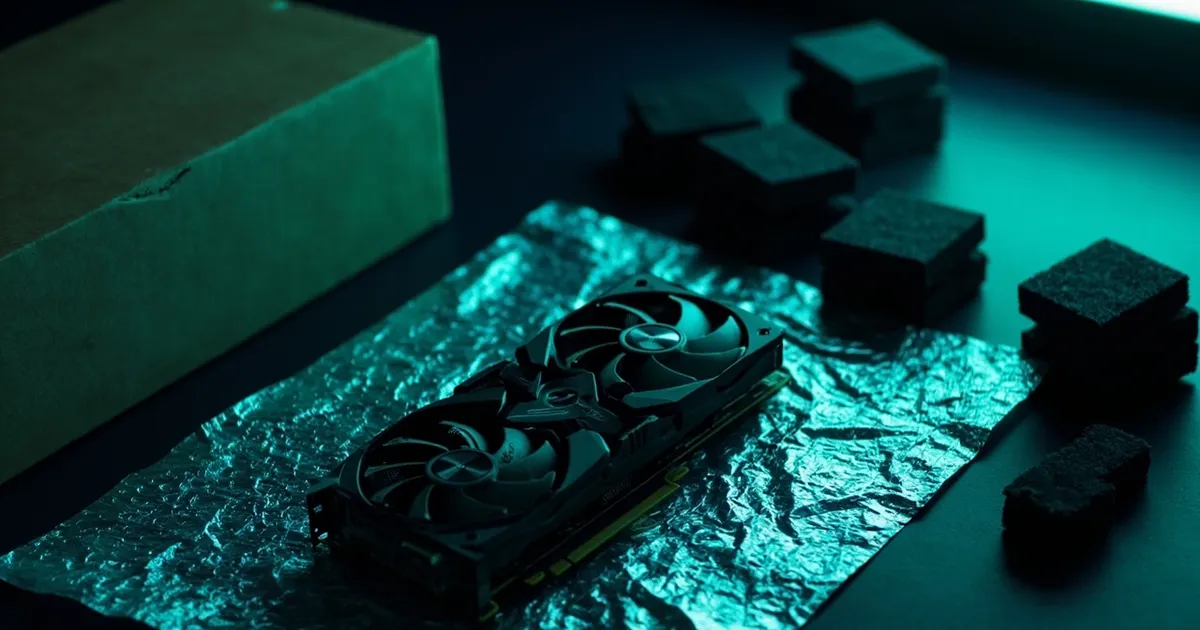
- Identify the exact GPU: chip model, board partner, variant name and memory size — all four must match your comparables.
- Record a stress test with screen visible and keep the video until the claim window closes.
- Disclose mining, overclocking or repairs honestly — undisclosed history triggers Vinted SNAD disputes.
- Pack in an antistatic bag inside a rigid box with padding so the card cannot shift during transit.
- Price against listings with the exact same chip, partner, variant and memory — not similar models.
- Identify the exact card: chip, partner, variant and memory
- Test before listing and record the proof
- Mining, overclocking and repairs: what to disclose
- Warranty and receipts: what you can and cannot promise
- Box, antistatic bag and packing
- Pricing against the exact model
- Channel: OLX, Allegro Lokalnie or Vinted
- Listing example: what good looks like
- Calculator: estimate your fees
Selling a used graphics card requires matching four numbers most sellers skip: the exact chip, the board partner, the specific variant, and the memory size. Get any of those wrong and your comparables are meaningless. Beyond identification, buyers want proof the card works and proof you told the truth about its history. This page covers each step so your listing survives the claim window intact.
This page covers exact model identification, how to test and record proof, what disclosure means for disputes, packing for safe shipping, pricing against the right comparables, and which marketplace fits your card.
Identify the exact card: chip, partner, variant and memory
A GPU listing is defined by four attributes:
- Chip model — the GPU core (for example, RTX 3060, RX 6700 XT).
- Board partner — the manufacturer who built the card around the chip (for example, MSI, ASUS, Gigabyte, Sapphire).
- Variant name — the specific product line within the partner's range (for example, Gaming X, Ventus, Eagle, Nitro+).
- Memory size — the VRAM in gigabytes (for example, 8 GB, 12 GB).
All four must match your comparables. Two "RTX 3060" listings can be very different cards depending on the partner, variant and memory. Read the label on the card for the exact model string, and verify it in your system's device information. List all four in your title and description.
See the resale category guides hub for other electronics categories.
The same identification rules apply to selling a used laptop. Reselling used electronics follows the same model-matching approach.
Test before listing and record the proof
Run a stress test or benchmark with the screen visible — temperatures, clock speeds and any error messages on display. Then run a short game session. Record the entire run. Keep this recording until the buyer claim window expires: 48 hours after pickup on OLX with delivery, and through the full order window on Vinted and Allegro.
- 1Identify exact modelChip + partner + variant + memory, all four match
- 2Test and recordStress test + game session, temperatures visible
- 3Disclose historyMining, OC, repairs, repasting — be honest
- 4Pack safelyAntistatic bag, rigid box, no movement
Mining, overclocking and repairs: what to disclose
Disclose honestly: any mining use, overclocking history, repasting of thermal paste, or repairs. Vinted's SNAD (significantly not as described) rule covers functionality not as described. Undisclosed damage or a history the buyer discovers later is a common dispute trigger. Vinted's UK help page lists "functionality not as described" as a ground for significantly not as described — undisclosed history falls into this category.
There is no verified public data showing that cards used for mining fail more often than cards used for regular desktop work. State the history plainly without claiming higher or lower reliability. If you do not know the card's history, say so — "history unknown" is more honest than silence.
Warranty and receipts: what you can and cannot promise
Warranty transfer policies vary by manufacturer. Check the specific brand's warranty page with your card's serial number. Some manufacturers transfer the remaining warranty to a second owner; others do not transfer at all. Do not promise a warranty transfer in your listing unless you have verified the policy for that specific serial. If in doubt, state "warranty as-is" or "please check with manufacturer."
Box, antistatic bag and packing
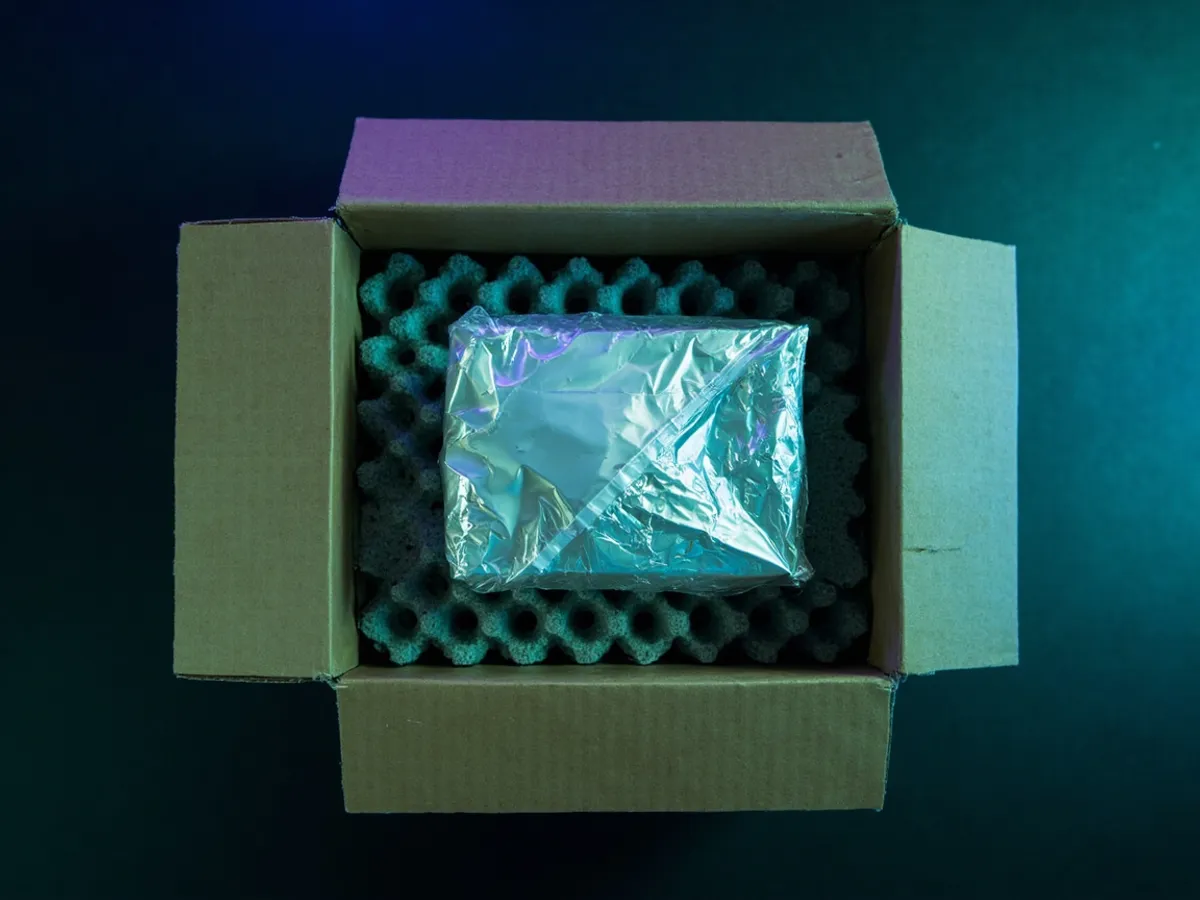
Graphics cards are sensitive to static electricity and physical pressure. Pack in this order:
- Antistatic (ESD) bag — seal the card inside.
- Rigid box — a box slightly larger than the card with foam or bubble wrap on every side.
- Padding — enough that the card cannot shift when you shake the box.
- Protector — protect the PCIe connector and fan blades from pressure.
- Seal and label — packing tape plus a fragile sticker.
Keep the original box if you have it — it is the safest shipping container.
Pricing against the exact model
Price against listings with the same chip, same partner, same variant and same memory. One mismatch means a different price tier. Say you have an RTX 3060 Ti from MSI, Gaming X variant, 8 GB memory. Your comparable must be exactly that — not "MSI RTX 3060" or "RTX 3060 Ti 8 GB."
Use Scout's five-level price ladder built from comparable items that left the market. The levels are:
- Fast sell — near the cheapest quarter of comparable asks
- Balanced — between fast and fair
- Fair value — median of comparables that left the market
- Market ask — between fair and max
- Max profit — at most fair value × 1.25
Prices are estimates, never guarantees. Choose the level that matches your urgency. To check comparables for your exact model, see our guide on finding comparable listings.
For example, if fair value for your exact model is around 1,200 zł, a fast-sell listing might be 950 zł, while holding out for max profit puts you near 1,500 zł.
Channel: OLX, Allegro Lokalnie or Vinted
OLX with Pakiet Ochronny (delivery protection): Available only with Płatności OLX (buyer prepays). The buyer has 48 hours after pickup to file a claim. The seller has 120 hours to respond. OLX decides within 30 days. If the claim is accepted, the item is returned at the seller's cost. Payout follows buyer confirmation or 48 hours after pickup with no claim. At the time of writing (September 2026), the Pakiet Ochronny fee amount is not published — it is shown in each listing. See the full OLX delivery protection rules.
Allegro Lokalnie (Elektronika category): 4.9% commission on Kup Teraz and auction listings. Local listings are free.
Vinted Electronics Verification: 20 zł, buyer-paid, includes shipping from seller to the hub. This adds trust but adds cost. Vinted's updated Terms take effect 8 October 2026 — check for fee changes after that date.
Choose OLX for local pickup where the buyer can test the card on-site. Choose Allegro Lokalnie for a free local listing or a 4.9% Kup Teraz sale. Choose Vinted with verification if you prefer shipping and want the platform's dispute process behind you. See marketplace shipping rules for carrier-specific requirements.
Listing example: what good looks like
- Discloses box, offers test video — builds trust
- Missing three of four key identifiers, no proof, no disclosure — dispute likely
A strong listing states all four identifiers, offers proof of testing, discloses history, and mentions original packaging. A weak listing hides the model behind vague language and offers no proof.
Calculator: estimate your fees
Use the fees calculator to estimate what each marketplace takes from your sale:
Frequently asked questions
Should I say a graphics card was used for mining?
Does a GPU warranty transfer to a second owner?
How do I pack a graphics card for shipping?
What proof of testing should I show buyers?
Sources
- OLX Pakiet Ochronny — Annex 8 (last updated 2025) checked 13 Sept 2026
- Vinted UK — significantly not as described items checked 13 Sept 2026
- Vinted Poland price list (last updated 15.09.2025) checked 13 Sept 2026
- Allegro Lokalnie fees (Elektronika category) checked 13 Sept 2026
- Vinted UK — old terms and conditions (with update notice) checked 13 Sept 2026
Analyze an item with reva
Open any find and see its five-level price ladder, demand score and price confidence, built from comparable items that left the market. Estimates, not guarantees.
reva estimates prices from public listings. Estimates, not guarantees.Keep reading
What sets the price, the main risk and the best selling channel for each category of used items, from phones and LEGO to jackets, with a guide for each one.
17 min read
Sell a used laptop without account-lock problems: wipe and unlink a Mac or Windows PC, check cycle count, match the exact spec and price it against listings.
7 min read
Flip laptops, consoles and cameras safely: what to test before buying, how condition and accessories set the price, and electronics fees and limits in Poland.
7 min read