 reva
revaSelling Used Headphones
Authentication and completeness set the price before brand does.
- Authenticate before you price: a serial that registers in the maker's app, a receipt and close logo photos are what move a genuine pair out of the counterfeit price band.
- Completeness is a pricing factor: the worked example shows a 55 zł gap between the same pair boxed with accessories (240 zł) and bare (185 zł).
- Replace pads only when their cost is clearly under the price lift you can demonstrate from comparables; otherwise sell worn and photograph the wear.
- For earbuds, describe observed battery life and include the case — invisible wear is always priced against the seller.
Knowing how to sell used headphones for a fair price starts with the two questions a buyer asks before the brand name: is this pair genuine, and what exactly is included? Authentication and completeness set the price band; pads, tips and the box decide where inside it you land. This page gives you verification checks for before you buy and before you list, a hygiene rule, and a comparables-based pricing method for Vinted, OLX and Allegro Lokalnie. It applies the ladder from the resale pricing guide to audio gear.
Why fakes dominate the cheap end of the market
Fakes cluster where nothing can be checked from a photo: unbranded packaging, missing serials, models offered in colours the maker never produced. Those asks sit at the bottom of every search, and they drag the meaning of the whole cheap band down with them. Vinted's catalogue rules call counterfeits "strictly forbidden" and warn that selling them "could expose sellers to civil and criminal proceedings" — the platform's wording, checked 13 September 2026.
For a genuine pair, the cheap band is a bad place to price. A real set of over-ears at 120 zł reads as suspicious, not as a bargain. Decision rule: if your ask lands inside the band where unverified pairs cluster, you compete on evidence, not on price. Serial photos, a receipt and a screenshot of the maker's app recognising the model are what move a listing out of that band, and they cost nothing but a few minutes.
Verification checks before you buy and before you list
Run the maker's own checks first. The serial on the cup, hinge or box should register in the manufacturer's app or support page; a fake often fails to register or registers as a different model. Then compare weight, hinge resistance and logo printing against the maker's product page, and ask for a receipt. The wider pre-purchase routine, including other categories, is in the authentication checklist.
Before you list, invert the same checks into evidence the buyer can see:
| Evidence | Where it goes |
|---|---|
| Serial photo, legible | photo 2 or 3 |
| Receipt or invoice (name cropped is fine) | photos and description |
| Maker's app screenshot recognising the model | description or chat on request |
Two platform facts worth knowing. Vinted's price lists publish Item Verification at 45 zł in Poland, £10 in the UK and €10 in France or Germany, plus a cheaper Electronics Verification (20 zł, £5, €5); check which services your category is offered when you list — what the service covers is described in Vinted item verification. And press coverage of Vinted's updated terms — in force from 5 October 2026 in France and Germany and from 8 October 2026 in the UK and Poland — reports a 48-hour window (up from 24) to provide evidence when a counterfeit report arrives, so keep your proof after the sale too.
Hygiene and wear: pads, tips, headbands
Wear concentrates where the buyer's skin and hands go: ear pads, in-ear tips, headbands. All of it photographs honestly, and that is the point — describe it before the buyer asks. Vinted requires a condition and a description of defects on every listing, and undisclosed damage is a not-as-described reason in its help pages. A pair returned as not as described refunds the buyer the item price, the buyer fee and the original shipping, so a mis-graded pair can leave you with no payout and postage spent. How wear maps to price levels is covered in how condition changes resale price.
Pads are the one wear item worth spending on. Decision rule: replace them when the replacement cost is clearly under the price lift you can show from comparables. Example: pads at 60 zł, clean pairs of the same model pricing about 120 zł above worn ones — the swap roughly returns double. Keep the originals; boxed with the pair, they support your description.
Boxed vs unboxed pricing gap: worked example
Completeness prices well because it is checkable: a buyer can see a box, a spare cable and a receipt in photos, and cannot see how the previous owner stored the pair. Say you list the same over-ears twice, once complete and once bare:
The 55 zł gap here is about 23% of the complete pair's price — an illustration of the shape of the gap, not a market constant. The rule behind it holds regardless of your numbers: photograph every included item individually, name them in the description ("box, 3.5 mm cable, airline adapter, receipt"), and price the bare pair a step down the ladder instead of hoping the gap goes unnoticed.
Earbuds vs over-ear: different markets
Earbuds price low because their main wear is invisible: battery capacity drops with every charging cycle, and no photograph shows it. A missing case or a single lost earbud removes most of the value outright. The honest description carries the sale — "holds about four hours per charge" (example wording) prevents claims better than "like new". In-ear tips are personal items, so sealed spare tips are worth including new.
Over-ear pairs price on what can be seen: pad condition, headband, hinge play. That makes them the better category for buying to resell — wear is visible, parts are replaceable, and the boxed-versus-bare gap gives you a lever. The wider method for electronics, including testing and describing faults, is in used electronics resale.
Pricing from comparables honestly
Collect five to ten live asks of your exact model and condition, then watch what disappears over two weeks. Live asks are your competition; the last prices of listings that left the market are the only real evidence of value — and a listing can vanish because it sold, was deleted or was withdrawn, so treat exits as approximate. The full method, including how to pick comparables, is in the resale pricing guide.
Example: exits at 180, 200 and 220 zł put fair value at 200 zł while asks cluster around 240. Fast sell sits near 185, market ask at 240, and max profit stays at or below 250 (fair value × 1.25). A complete pair — box, receipt, fresh pads — earns the top of that band; a bare one does not, whatever a single optimistic ask suggests. That is the whole discipline of how to sell used headphones without guessing: evidence first, ladder level second, rounding last.
Related guides
Frequently asked questions
How can I tell if headphones are fake?
Do I need to include the original box?
Should I replace ear pads before selling?
Why are used earbuds worth so little?
Sources
- Vinted UK Catalogue Rules checked 13 Sept 2026
- Vinted UK Help: Significantly not as described items checked 13 Sept 2026
- Vinted UK price list checked 13 Sept 2026
- Vinted Poland price list (cennik) checked 13 Sept 2026
- Value Added Resource: Vinted Europe terms update, October 2026 checked 13 Sept 2026
Analyze an item with reva
Open any find and see its five-level price ladder, demand score and price confidence, built from comparable items that left the market. Estimates, not guarantees.
reva estimates prices from public listings. Estimates, not guarantees.Keep reading

How to price used items for resale: comps from sold and live listings, condition, price levels from fast sale to max profit, markdowns, offers and bundles.
21 min read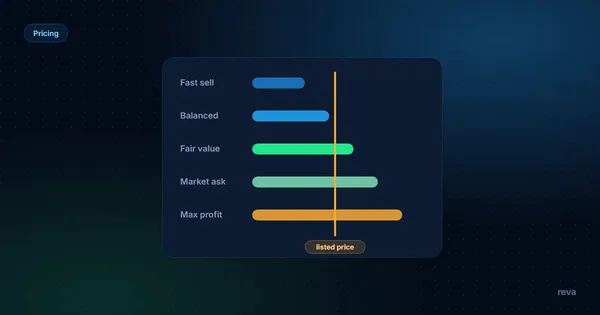
How much condition moves resale prices: Vinted's percentage-of-retail guide, how to grade honestly, and how flaws, photos and missing parts change it.
8 min read
A pre-purchase authentication method for resellers: documentation habits, category checks, platform verification services compared, and risk rules.
14 min read