 reva
revaSelling Used Cameras
Actuations and fungus matter more than age.
- Body class, actuations and sensor condition decide the comp pool, in that order — a comparable that skips any of them prices a different camera.
- On many bodies the shutter count sits in a JPEG's EXIF data; state it as a number in the title and price from comparables in the same count band.
- Lenses sell in their own market: inspect the glass at a light angle for fungus and haze, and price a kit as parts before you bundle it.
- Bundle at the parts sum minus a small convenience discount; split body and lens only when the gap beats the extra work of two sales.
- Fungus is priced like damage: a deep discount against clean comparables, or a pass at buying time.
How to sell used cameras comes down to two numbers most sellers never mention: shutter actuations and sensor condition. Those two, plus the exact body model, decide which comparables count; after that, price the body and each lens separately, because kit pricing is where most sellers lose money.
This page covers the price drivers, how to find and describe shutter count honestly, the lens market inside your sale, a worked kit-pricing example, and the listing details camera buyers search for. The pricing ladder follows the resale pricing guide, and every number below is a worked example.
What decides the price: body class, actuations, sensor
Three filters build your comp pool, in this order:
- Body class. An entry-level body, a mid-range one and a professional one rarely compete with each other, even across brands. Match the class first, then the mount generation, because a body that cannot run the lenses buyers expect is a different product.
- Actuations. The shutter count, read like mileage on a car: two identical bodies with different counts belong in different price bands.
- Sensor condition. Dust is cleanable; oil on the sensor, fungus or scratches are price events. A photo of the sensor under a light belongs in every listing.
A comparable that counts is: same body, same mount generation, similar actuation band, disclosed sensor state. Everything else prices a camera you are not selling.
How to check shutter count and describe it honestly
On many bodies the shutter count is stored in the photo file itself: shoot a JPEG, open it in any EXIF viewer, and read the actuation number. Some makers also show it in the menu or a utility, and a camera shop can read it if nothing else works. Look up your model's rated shutter life too — makers publish endurance figures, and entry-level bodies are commonly rated around 100,000 actuations while professional bodies are rated several times that — so "high" is a comparison against your model's rating, not a feeling.
Describe the count with a number, not adjectives: "about 12,400 actuations" beats "barely used" every time. If you genuinely cannot read the count, say so plainly — buyers assume the worst when a seller hides the one number they came for.
Banding for comparables. Split your comparables into count bands you choose — say under 10,000, 10,000–50,000, over 50,000 — and price your body from its own band. The gap between bands is your actuation discount, measured from the market instead of invented. It is the single most useful habit in selling used cameras, and the one skipped most often.
Lenses: the separate market inside the sale
Lenses sell in their own market with their own comparables: exact model, mount, and the condition of the glass. Three checks matter when you buy and again when you list:
- Front and rear elements at a light angle: fungus threads, haze, scratches
- Rings: zoom and focus turn smoothly through the whole range, no grinding
- Aperture and autofocus on a body: blades snap cleanly, AF finds focus or it does not
"Fungus" in a listing means fungal growth inside the element — threads or a web that spreads in humid storage. Price it like damage: a deep discount against clean comparables, or a pass at buying time unless the price already reflects a parts sale. A haze that wipes off the outer surface is not fungus; a haze inside the glass is.
Caps, hoods and original boxes speed a lens up more than they lift the price. Mention them, photograph them, and price the glass on its own merits.
Pricing a kit as parts: worked example
Say you have an entry-level body with 9,000 actuations, a standard zoom and a spare bag, and you want one sale instead of three. Price each part from its own comparables, then decide the bundle discount:
- Body (9,000 actuations, clean sensor)1,450 zł
- Standard zoom, clean glass320 zł
- Bag and spare battery130 zł
The parts sum is 1,900 zł. A one-box bundle should beat the sum slightly on convenience, so list near 1,850 zł — for example — and treat anything above 1,700 zł as a good week. If the kit stalls, split it: the body and the lens address different buyers, and the € version of the same kit might read body €340, lens €75, extras €30 — a parts sum of €445.
Decision rule: bundle at the parts sum minus a small convenience discount; split when splitting adds more than it costs. Every number here is an example — your comps write the real ones, with the method in finding sold comps.
Listing details camera buyers look for
Camera buyers filter on specifics, so give the specifics a place in the first lines:
- A buyer cannot build a comp pool from this, so the price reads as a guess and invites lowballs.
- Every search filter matches, and the description pre-answers the three questions a serious buyer asks.
What changes at this level: the title carries the model and the count, one photo shows the sensor, one shows the mount and the rear element, and the glass gets its own sentences. Titles and descriptions have a fuller method in writing listing titles and descriptions, and the photo set itself in product photos that sell.
When to sell body and lenses to different buyers
The body buyer and the lens buyer are often not the same person: someone upgrading a body already owns glass, and someone building a lens set already has a body. Bundling forces you onto whichever buyer searches for kits — the smaller group.
Split when all three are true:
- The parts sum beats your best bundle offer by more than a token — say more than 100 zł on a 1,900 zł kit, for example.
- Each part clears its own quick-sale price, so a slow lens is not funding a cash-flow gap.
- You can carry two listings — two sets of messages, two shipments — without letting either go stale. Demand for each part is worth a check with how to check resale demand.
Keep it as one kit when the parts are ordinary, the margin is thin, or you need the shelf space more than the last few percent. That rule — price the parts, bundle for convenience, let the gap decide — is the quiet core of how to sell used cameras profitably, and it transfers straight to the rest of reselling used electronics, with condition grading from how condition changes resale price.
Related guides
Frequently asked questions
Does shutter count really change the price?
Should I sell the kit or separate the lens?
How do I check a lens before buying it to resell?
What does 'fungus' mean in a listing?
Analyze an item with reva
Open any find and see its five-level price ladder, demand score and price confidence, built from comparable items that left the market. Estimates, not guarantees.
reva estimates prices from public listings. Estimates, not guarantees.Keep reading

How to price used items for resale: comps from sold and live listings, condition, price levels from fast sale to max profit, markdowns, offers and bundles.
21 min read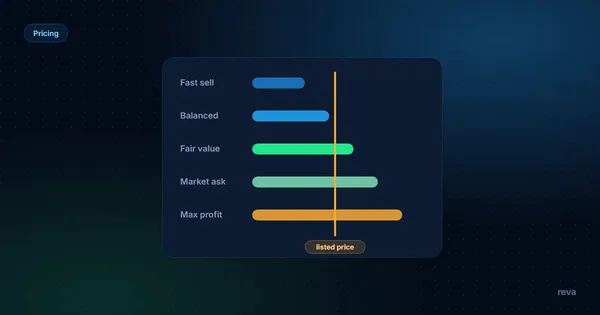
How much condition moves resale prices: Vinted's percentage-of-retail guide, how to grade honestly, and how flaws, photos and missing parts change it.
8 min read
Flip laptops, consoles and cameras safely: what to test before buying, how condition and accessories set the price, and electronics fees and limits in Poland.
7 min read