 reva
revaReselling Samsung Phones
Model, storage and screen condition decide most of the price.
- Price the model code, not the marketing name: Settings → About phone gives the SM- code, and one Galaxy name can hide several codes, storages and bands.
- Comparables must match model code, storage and condition band; storage splits the market, colour is only a tie-breaker.
- Run the 5-point check — screen, back and frame, battery, cameras and ports, account locks — and grade the phone into bands with photos.
- Your walk-away number comes from the ladder's bottom: all-in cost at or under fast sell, minus your costs and profit floor.
- A cracked back costs less than a cracked screen but still moves the phone down a band — disclose both and photograph both.
Reselling a Galaxy starts with three facts that matter more than the brand: the exact model code, the storage size, and the screen and battery state. "Galaxy S23" is not one product — it is several codes, several storages and several condition bands, each with its own market and its own price ladder.
The method below works whether you resell used Samsung phone models once a year or flip them weekly. It is the Galaxy-side companion to our iPhone resale guide: how to identify the model, what storage and colour actually move, a five-point condition check, a worked comps example, and where Samsung differs from Apple when you sell. Every number below is a worked example.
Find the exact model before you price anything
Open Settings → About phone. Two lines matter:
- Model name — the marketing name: "Galaxy S23", "Galaxy A54". This is what buyers search.
- Model number — the code starting with SM-, such as SM-S911B. The digits identify the exact device, and the final letters usually indicate the intended market, with B common on European units.
The same marketing name hides several codes: a flagship generation typically spans a base model, a Plus, an Ultra and sometimes a Fan Edition, each in several storages. Price the code, not the name — a comparable for one variant tells you very little about another.
Record two more identifiers while the menu is open: the storage size (it shows in Settings and on the box label) and the IMEI or serial for your records. Photograph the About screen once and reuse it in the listing — it does the identification for you.
Decision rule: if a listing cannot state the model code, price it a band lower. You are taking on identification risk the seller did not price in.
Storage and colour: what moves and what does not
Storage changes price; colour mostly does not.
- Storage splits the market into separate pools. Base storage is the most listed and the cheapest; the step up is worth real money. Example: say 128 GB units of one model leave the market near 620 zł while 256 GB units sit nearer 730 zł. That 110 zł gap is why a comparable must match storage exactly — a mixed median prices a phone that does not exist.
- Colour is a tie-breaker between otherwise equal listings, not a pricing factor on its own. Unusual colours can sit longer before someone wants them; there is no published premium you can rely on, so do not pay one at buying time.
One trap to avoid: the storage written in a listing is sometimes wrong. The About screen and the storage settings page are the truth; a box alone is not, because boxes swap.
The 5-point phone condition check
Five checks decide most of the price. Run them before you buy, then repeat them on video for your own listing.
- 1ScreenBright wallpaper: scratches, dead pixels, touch across the whole panel
- 2Back and frameCracks in the back glass, dents on the corners
- 3BatteryA real day of use, or the battery information in settings
- 4Cameras, speakers, portsEvery lens, both speakers, and a charge with a cable
- 5Account locksSamsung and Google accounts removed; the phone accepts a new SIM
After the checks, grade the phone into bands — clean, light wear, heavy wear, faulty — and keep each band's comparables separate. A cracked back usually costs less than a cracked screen, because the screen carries touch and display, but it still moves the phone down a band: buyers cannot unsee it, and repair costs eat thin margins.
Decision rule: anything that fails a check moves the phone one band down, and anything undisclosed becomes a claim. Grade it, photograph it, write it. Condition grading across categories works the same way — see how condition changes resale price.
Pricing from live comparables: a worked example
Comparables for a phone mean: same model code, same storage, same condition band. With that filter set, read two lists — current asks, and the last prices of listings that disappeared — as described in how to find comps and the resale pricing guide.
Example. Say one model in 128 GB, clean band: six listings left the market at 580, 600, 620, 640, 660 and 700 zł — median 630 zł. Live asks run 600–780 zł with a median near 700 zł, and the cheapest quarter of asks ends around 615 zł. Your ladder: fast sell 615, balanced 625, fair value 630, market ask 700, max profit 787 (630 × 1.25).
The same run on a euro site might read: exits €135–165 with a median of €145, and a ladder of €140 / 143 / 145 / 165 / 181. The digits change; the method holds.
Your buy price comes from the ladder's bottom, not its top: all-in cost at or under fast sell, minus your costs and profit floor. At a 615 zł fast-sell target and, say, a 100 zł floor for costs and effort, you pay at most about 515 zł — and less if the battery or the back glass is marginal. Write that walk-away number down before the negotiation, not during it.
Where Samsung resale differs from iPhone resale
The comp-and-ladder method is identical; the market around it is not:
- Model sprawl. The range runs from budget A-series to Ultra flagships, and the mid-range carries thin margins — the ladder spread on a budget model can be smaller than your transport cost. Flagships have deeper comp pools and buyers who compare them with iPhones directly.
- Variant discipline. Because one name hides many codes, mispriced listings are usually misidentified listings. The code-first habit pays twice on Galaxy stock, and the same discipline applies when you resell used Samsung phone models at the budget end, where a single storage step can swallow the margin.
- Buyer questions. Galaxy buyers ask about screen burn-in and battery life; iPhone buyers ask about battery health percentages and parts messages. Answer your market's question in the listing before it is asked.
The category-wide view of electronics — consoles, laptops, phones sharing one shelf — is in reselling used electronics.
Trade-in sites vs marketplace sale
A buyback quote is a floor with a date on it; a marketplace sale is a range you have to work for. Compare them in money and in hours:
Example: your clean 128 GB phone has a fair value of 630 zł. A buyback service offers, say, 500 zł and pays within days of inspection. A marketplace sale at the balanced level of 625 zł might net about 570 zł after packaging and travel — but only after messages, a few days of waiting and some claim risk. The 70 zł difference buys your week back; only you know what your week costs.
Which marketplace fits a phone — and how the big options differ — is its own decision: see where to sell phones. For anything you cannot fully test, the quote's certainty usually beats a listing that comes back as a dispute.
Related guides
Frequently asked questions
How do I find my Samsung model number?
Does a cracked back matter as much as a cracked screen?
What should I include in the listing to get a better price?
Is a carrier-locked phone worth less?
Analyze an item with reva
Open any find and see its five-level price ladder, demand score and price confidence, built from comparable items that left the market. Estimates, not guarantees.
reva estimates prices from public listings. Estimates, not guarantees.Keep reading

How to price used items for resale: comps from sold and live listings, condition, price levels from fast sale to max profit, markdowns, offers and bundles.
21 min read
Flipping an iPhone: IMEI, iCloud lock and battery health checks, how storage and condition set the price, and fees and limits on OLX and Allegro Lokalnie.
7 min read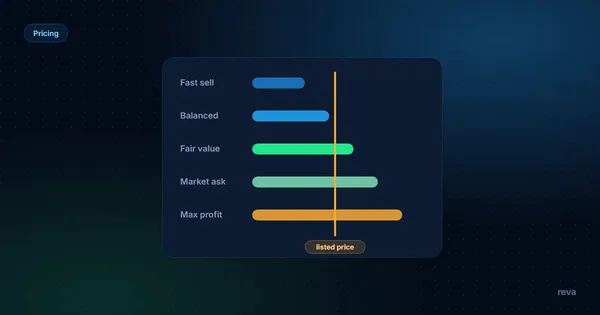
How much condition moves resale prices: Vinted's percentage-of-retail guide, how to grade honestly, and how flaws, photos and missing parts change it.
8 min read