 reva
revaeBay Auction vs Buy It Now
Auctions are for discovery and demand spikes. Fixed price is for everything else.
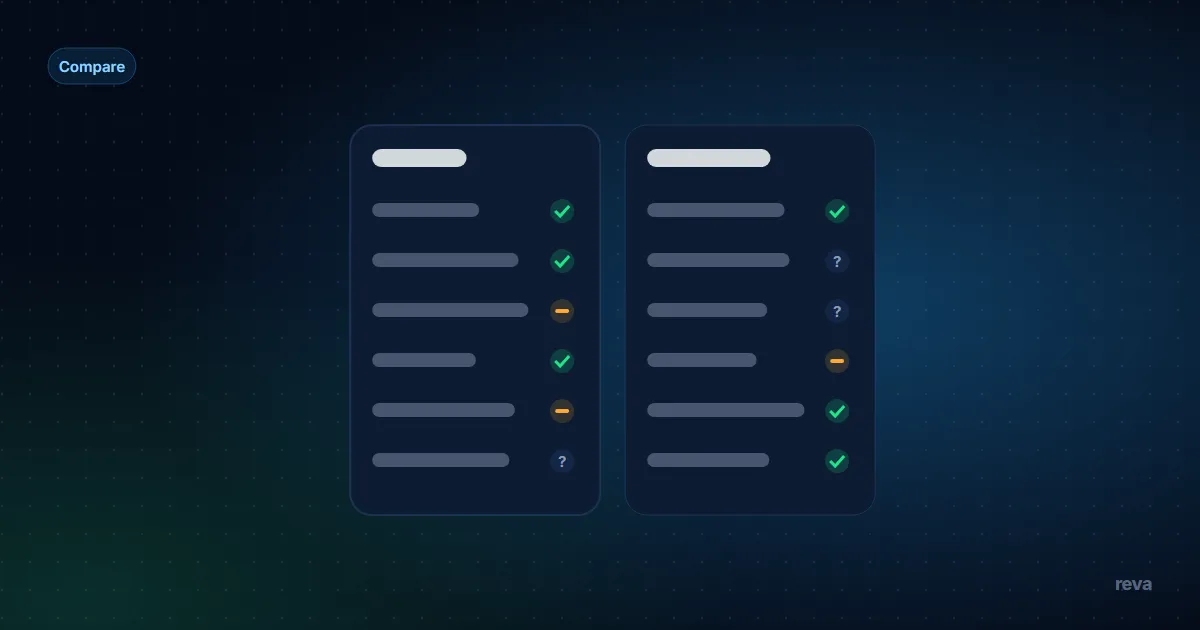
- Auction = buyers set the price inside a timer; Buy It Now = you set the price and the listing waits. Use the auction when value is unknown or demand is contested; use fixed price whenever comparables exist.
- Fee pages list final value fees by category with no separate auction rate; the format differences sit in listing allowances, upgrade fees (subtitle, bold, reserve) and the duplicate-listing rule — all checked per market on 13 September 2026.
- Reserve prices are paid upgrades: US eBay charges the greater of $5 or 7.5% of the reserve (max $250), UK private sellers 4% (max £150), eBay.de private sellers 3% (max €150). A high start price is the free alternative floor.
- US policy on duplicates: identical auctions may run only with the same start price, reserve, title and description and no Buy It Now, with one visible at a time; eBay advises one multi-quantity listing or variations instead.
- Fees and free allowances differ sharply by market: UK private sellers pay no final value fee, eBay.de private selling inside Germany is free, while eBay.pl private sellers pay an 11% final value fee — always check your own market's page.
- The two formats, mechanically
- Where auctions still make sense: rare, contested, hyped
- Why fixed price dominates: search, shelf life, comps
- Fee and upgrade differences between formats (checked 13 September 2026)
- Auction tactics that actually matter: start price, timing, reserve costs
- Decision rules by item type
- Related guides
The eBay auction vs Buy It Now choice is about who sets the price: the bidders, inside a countdown, or you, with a number that waits. Auctions earn their place when an item's value is unknown or two bidders are likely to push each other up; fixed price wins everything you can price from comparables. Fee pages list final value fees by category with no separate auction rate, so the real differences sit in allowances, upgrade fees and the duplicate-listing rule, checked below.
The two formats, mechanically
An auction gives you a start price and, optionally, a reserve; the listing runs a set number of days and the highest bid when the timer ends wins. The start price is the one number you fully control, and your only real floor: a no-reserve auction sells to the top bid on the day, however low.
Buy It Now is the opposite trade: you set the price and the listing waits for a buyer through search. On US eBay it can run as Good 'Til Cancelled, renewing once a calendar month with insertion and upgrade fees at each renewal.
| Auction | Buy It Now | |
|---|---|---|
| Who sets the price | Yesthe bidders, inside the timer | Noyou, before listing |
| How it ends | Yesa set number of days, then the top bid wins | Nostays live until it sells or you end it |
| US insertion fee after the free 250 | Yes$0.35 per listing; duplicate auctions are charged per listing | Yes$0.35 per listing |
| Reserve price (US) | Partlypaid upgrade: greater of $5 or 7.5% of the reserve, max $250 | Not statednot listed among fixed-price upgrades on the US fee page |
| Subtitle upgrade (US) | $1.50–$3.00 | $2.00–$6.00 (Good 'Til Cancelled) |
| Identical listings at once (US policy) | Partlyonly with same start price, reserve, title and description, and no Buy It Now; one visible at a time | Noone identical fixed-price listing at a time |
Where auctions still make sense: rare, contested, hyped
Three situations put the countdown on your side.
Nobody knows the price. With no comparables — a rare piece, an odd lot — an auction is price discovery: bidders tell you what it's worth. How to price an item with no comparables makes the auction the last of four fallbacks.
You can see a contest coming. Two serious collectors on one collectible, or a demand spike after publicity — rival demand makes an auction beat your best guess.
You need an outcome by a date. The timer forces an ending; a fixed price can sit for months.
The rule: run an auction only when you can accept the price the crowd sets, including a thin one.
Why fixed price dominates: search, shelf life, comps
Everything else belongs on Buy It Now, for three reasons.
Search is how eBay buyers shop: a fixed-price listing is a search result that keeps working, an auction a ticket to one event.
Shelf life is unlimited: a fixed price waits weeks for the buyer who wants exactly your size or variant, and you can revise as you learn.
Comps do the pricing: eBay shows sold prices, so you can price from evidence instead of bidders' luck. Finding sold comps covers the method, and why asking prices are weaker evidence.
Fee and upgrade differences between formats (checked 13 September 2026)
The US numbers sit in the figure above; elsewhere the format difference shows up in allowances and upgrade prices rather than commission:
- UK, private sellers: 300 free listings a month (400 with a Shop), then 35p per listing, and no final value fee on the sale — the buyer pays a buyer protection fee instead. Upgrades: subtitle £2, second category 35p, Gallery Plus £2.50 (free in Clothes, Shoes & Accessories), reserve 4% up to £150. UK business sellers without a Shop pay 30p per listing either way; a Basic Shop (£27 a month) includes 250 free fixed-price and 100 free 7-day auction listings.
- Germany, private sellers (eBay.de): domestic selling has been free for EEA-resident private sellers since March 2023 — 320 free listings a month, then €0.50 — plus up to 2,500 extra free auctions a month with a €1.00 start price (excluding 1- and 3-day durations). Reserve 3%, max €150; subtitle €0.50.
- Poland, private sellers (eBay.pl): 150 free listings a month, then 1.50 zł per listing; a final value fee of 11% of the sale up to 9,990 zł (2% above), plus 0.25 zł per order under 50 zł, otherwise 1.35 zł; upgrades: subtitle 2.20 zł, second category 1.50 zł.
Fees change often and some pages show no date; re-check your market's selling-fees page before listing. For the UK in full, see eBay UK fees; what an insertion fee is explains how free allowances get used.
Auction tactics that actually matter: start price, timing, reserve costs
Start price = your walk-away floor. A no-reserve auction sells to the top bid whenever the timer stops, so set the start at the least you would accept, and let it end when your buyers actually browse — evenings for after-work categories. A start meant to lure bids you would refuse is a discount you have scheduled in advance.
Reserves cost money; start prices don't. If your floor is high, raise the start instead — on US eBay the reserve is the greater of $5 or 7.5% of the reserve (max $250), against a start that costs nothing.
Mind the duplicate rule. Identical auctions are allowed only with the same start price, reserve, title and description, no Buy It Now, and one visible at a time while none has bids; consequences run from removal to account suspension. eBay's advice: one multi-quantity listing or variations instead. Relisting: US eBay charges its insertion fee on every relist; UK, German and Polish private accounts relist automatically for free, manually against the allowance.
Decision rules by item type
- No comps, or a likely two-bidder fight: auction, with the start set at your walk-away price.
- Known comps, everyday item: Buy It Now, priced from where similar items left the market.
- Several identical units: one multi-quantity listing or variations — duplicates in either format create policy and fee problems.
- High-value piece, thin bidder pool: fixed price with patience — a slow-day auction prices your item at its one bidder.
Choose the auction if value is unknowable, demand is visibly contested, or a deadline is the point. Choose Buy It Now if comparables exist, buyers search for your item by name, or you want the listing working while you sleep — which is most stock: fixed price is the default and the auction the tool you bring out on purpose. For the wider field, the best resale platforms in Europe compares marketplaces, and the reselling guide is the overview this hangs from.
Related guides
Frequently asked questions
Do items sell better at auction or Buy It Now on eBay?
When should I use an auction on eBay?
What starting price should I set at auction?
Does a reserve price cost extra?
Sources
- eBay US selling fees checked 13 Sept 2026
- eBay UK fees for private sellers checked 13 Sept 2026
- eBay UK fees for business sellers checked 13 Sept 2026
- eBay.de fees for private sellers (Gebühren für private Verkäufer) checked 13 Sept 2026
- eBay.pl fees for private sellers (Opłaty dla prywatnych sprzedawców) checked 13 Sept 2026
- eBay US duplicate listings policy checked 13 Sept 2026
Start with reva
One place to find underpriced items, check their market value and act before someone else does.
reva estimates prices from public listings. Estimates, not guarantees.Keep reading
How reselling works end to end in the EU and UK: sourcing, pricing, marketplaces, fees, taxes, shipping and scaling, with Poland examples in zł.
26 min read
Which resale marketplaces to use in Poland, Germany, the UK and the rest of Europe: fees, who can sell, buyer protection and the categories each one suits.
15 min read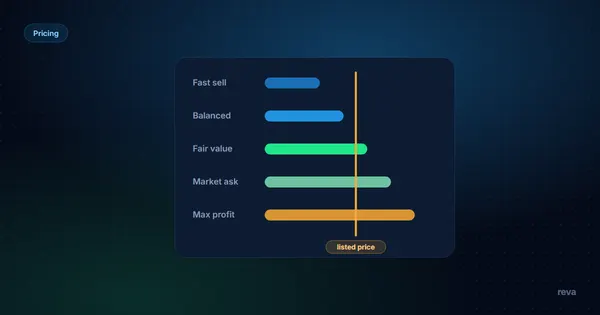
No comparable listings? Four methods that still work: category anchors, cost-plus floors, price discovery with revision dates, and asking the market.
7 min read