 reva
revaSeasonal Resale Pricing
A winter coat has two prices a year. Most categories do.
- Every seasonal category has three dates worth writing down: peak start, peak, and the discount threshold — your pricing calendar, set before the season.
- Seasons change speed as well as price: the same coat that takes weeks to exit in July can leave the market in days in November.
- Off-season buying is a loan you give yourself: cheap stock, expensive capital — buy only timeless pieces with free storage and a floor that survives a weak peak.
- The hold-or-liquidate call is a comparison of cash today against a hoped-for peak exit minus storage and dead capital, decided at a date you set in advance.
- No platform publishes seasonal averages for EU resale — your own two-median log (peak vs off-season asks) is the only number worth pricing on.
Seasonal pricing resale comes down to one admission: a winter coat does not have one price, it has at least two a year, and most categories are the same. You price into the rise, sell through the peak, and clear on a schedule after it — and you only hold stock off-season if storage is genuinely free and the cash is not needed elsewhere. Below: how to build a three-date calendar for your categories, the off-season buying trade-off, and the hold-or-liquidate decision for the stock that missed its window.
Every number here is a worked example in zł. Season patterns are planning patterns, not measured market data — no platform publishes them.
Why seasons change both price and speed
A season shifts demand, and demand moves two numbers at once: what buyers accept and how fast they show up. The same coat can sit for weeks in July and leave the market in days in November. That second number matters as much as the first, because time on the market is storage cost, capital risk and listing-age decay.
Say you track men's winter coats, size L, good condition, all season. In June the median ask across eight matched listings is 48 zł and nothing has left the market in a fortnight. In November, on the same search, the median ask is 104 zł and three comparables disappear within a week. Price and speed moved together — that is the seasonal signature, and it is what you are looking for when you build a calendar.
Your seasonal pricing resale calendar
Three dates per category turn seasonality from folklore into a plan:
- Peak start — the month matched asks begin climbing and exits speed up. List here, not after.
- Peak — the weeks when full-price asks have the best odds. Your strongest stock goes live before this window, not during its end.
- Discount threshold — the date after which you step prices down on a schedule instead of waiting.
- Median matched ask
- Your all-in cost floor (60 zł buy + costs)
You set the dates by watching, not by copying a chart like the one above: save the search in late summer, log the median ask and the exits every week, and the rise announces itself. Two seasons of notes give you a calendar for your city and your condition mix.
- Feb–Apr
Bike demand climbs with the weather — service and list before the peak, not in it
- May–Jun
Bike peak: full-price asks have the best odds; first discount threshold in July
- Sep–Oct
Winter clothing and boots start moving; list into the rise
- Nov–Dec
Winter peak, plus gift categories; back-to-school stock should be long gone by now
- Jan–Feb
Clearance window: unsold winter stock either clears cheap now or waits a year
Buying off-season: the storage-cost trade-off
Off-season sourcing buys low and lends your own money to the future. The trade has three costs, and only the first is optional to ignore: capital tied up for months, physical storage, and the risk that the trend or your size market moves.
Worked example: twenty coats at 60 zł each in June is 1,200 zł that does nothing until October. If that 1,200 zł would otherwise turn over in your fastest category every six weeks at a 25% net margin, the idle months have a price — you are forgoing close to three full turns to earn one seasonal gap of 45 zł per coat. The gap can still win. It wins when the item is timeless (plain cuts, classic brands, no fashion cycle), storage is truly free, and the buy price is low enough that even a disappointing peak clears your floor.
Decision rule: buy off-season only if the deal survives your weakest plausible peak, not the median one.
Pricing into the peak vs clearing after it
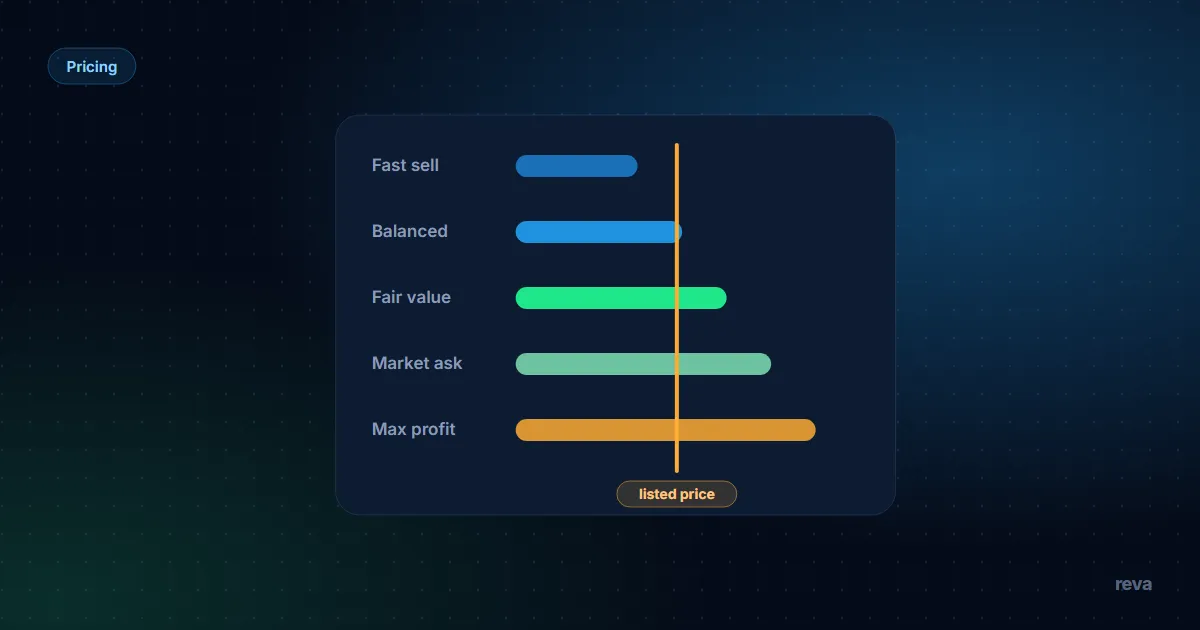
Inside the peak, price from live comparables like any other week — the five-level method in the price ladder applies as normal. Two seasonal adjustments: list your best stock before the peak's midpoint, because late-peak listings meet a thinning buyer pool; and expect offers to be less desperate at peak, so your offer floor can sit higher.
After the discount threshold, the job changes from earning the most to exiting on schedule. Example for the 60 zł coat listed at 99 zł on 1 October: no sale by 20 November → 89 zł; no sale by 10 December → 79 zł; on 5 January, clear — 65 zł as part of a three-coat bundle or a lot listing, done. The step-down logic and platform relisting rules are in when to lower a price.
The hold-or-liquidate decision for missed stock
Stock that missed its window forces one question: hold a year, or convert to cash now? Price both sides honestly.
Example: liquidation through bundle channels offers about 45 zł per coat today. Holding hopes for 105 zł next November — minus eleven months of a wardrobe rack and 60 zł of dead capital per coat. If you would not re-buy this coat today at 60 zł to sell it next November, holding is a contradiction: you already own it, but the reasons not to buy it are the reasons not to keep it.
Holding is also a portfolio decision, not just an item one. Capital parked in last year's coats is capital not buying this week's flips — the ceiling checks in how much inventory a reseller should keep catch that, and the exit routes for stock you decide against are in how to liquidate dead stock.
Category notes: clothing, bikes, sports gear, back-to-school
Typical demand windows in Poland and the wider EU — planning patterns to verify with your own search, not statistics:
| Category | Typical demand window | What to watch |
|---|---|---|
| Winter clothing and boots | Rise from September, peak Nov–Dec, clearance Jan | Fashion cycles move fast; plain basics carry over, statement pieces may not |
| Bikes | Rise with the first warm weeks, peak May–Jun | Service and photograph in time; a July listing meets a falling market |
| Ski and snowboard gear | Nov–Jan | Higher values need condition proof; missed window costs a full year |
| Back-to-school (backpacks, desks) | Jul–Aug, brutally short | Miss it and the stock waits ten months; buy late-season leftovers accordingly |
| Fans and air conditioning | Heat-dependent, Jun–Aug | A cool summer is a dead season for stock already bought |
Whatever the category, the demand side of the calendar — whether the buyer pool is actually moving yet — is what checking resale demand measures before you commit money. The broader frame for all pricing decisions, seasonal or not, is the resale pricing guide.
Related guides
Frequently asked questions
What is the best month to sell winter clothes?
Is it worth buying seasonal stock off-season?
How much cheaper do seasonal items get off-season?
When should I liquidate seasonal stock that did not sell?
Analyze an item with reva
Open any find and see its five-level price ladder, demand score and price confidence, built from comparable items that left the market. Estimates, not guarantees.
reva estimates prices from public listings. Estimates, not guarantees.Keep reading

How to price used items for resale: comps from sold and live listings, condition, price levels from fast sale to max profit, markdowns, offers and bundles.
21 min read
A markdown schedule for listings that aren't selling: when to cut, by how much, when to stop, and how to tell a price problem from a visibility problem.
8 min read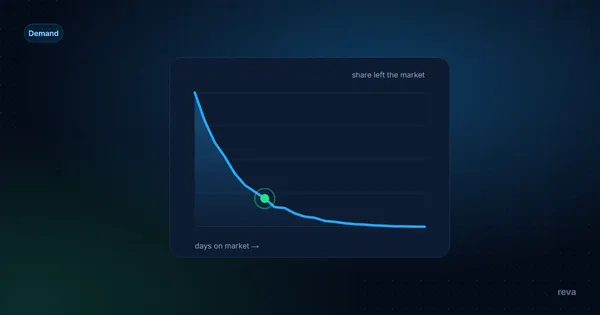
Check resale demand before you buy: live competition, favourite speed, how fast similar listings leave the market and liquidity vs margin, no sold filter.
9 min read