 reva
revaBuying Bulk Lots to Resell: What a Mixed Lot Is Really Worth
A box of 40 items is not 40 profits. Value the few pieces that carry the lot, plan how to split it, and decide in advance where the rest goes.
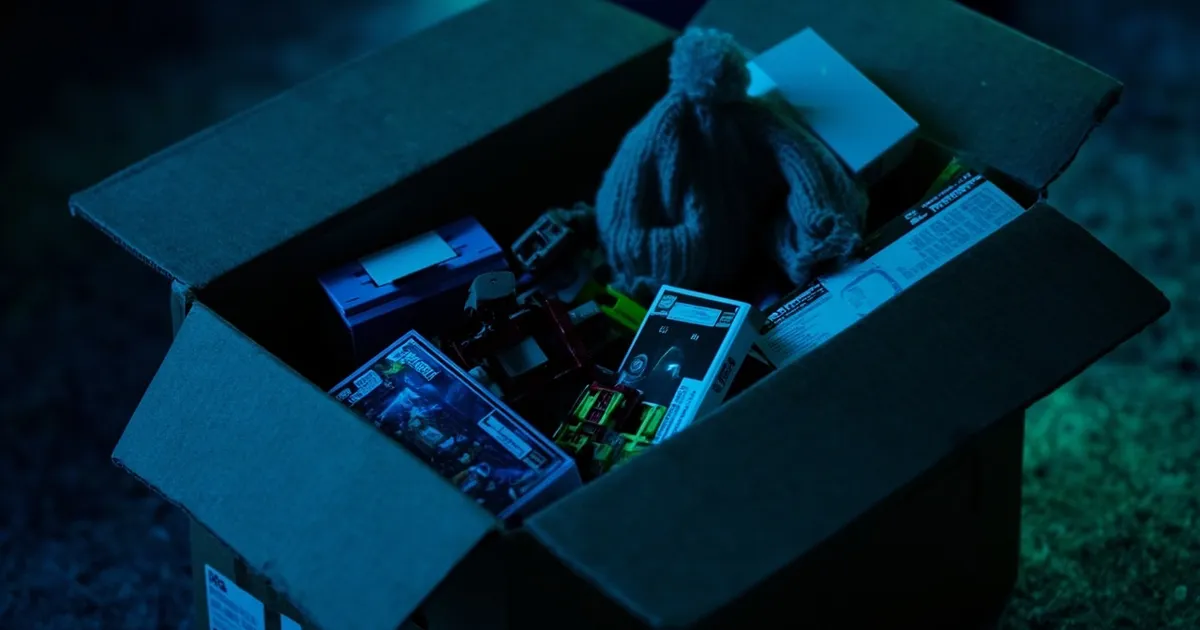
- Price a lot by its best items only — take fast-sell prices of roughly the top fifth, treat everything else as a bonus. This is a rule of thumb, not a measured statistic.
- Before buying, sort every item into a break-up plan: sell alone, bundle, re-lot leftovers, or donate/recycle. The plan determines what the lot is really worth.
- Count your time at an hourly rate you choose — photographing, listing, messaging, and packing add up fast. If the lot does not cover your time at a rate you find acceptable, walk away.
- OLX requires every listing to state whether it is a single item, multiple items, or a set. Breaking a lot into many single-item listings uses your category's free-limit quota.
When you see a mixed lot — a box of 30 used toys, a bundle of vintage books, a pile of returned Amazon items — the per-item price looks irresistible. Twenty zł per item for a lot of children's toys? The math seems to work even if you sell half at half price. But lots hide costs that do not show up in the headline: the time to list every item separately, the items that nobody wants, and the fees that eat into thin margins.
This page is part of the product sourcing guide — the pillar for resellers buying stock. It covers how to price a lot honestly, plan the break-up before you buy, account for the time nobody counts, and decide what to do with leftovers.
Why lots look cheap and often are not
The per-item price is a mirage. Say a lot of 35 children's toys and games is offered at 700 zł — that is 20 zł per item, well below what most sell for individually. But if only 10 of those 35 items have real resale value (the rest are damaged, duplicates, or unsellable), your effective cost is 70 zł per valuable item, not 20 zł.
Beyond the items themselves, every lot carries three invisible costs:
- Listing work. Each item or bundle needs its own photos, description, and price. A lot of 35 items is not one listing — it is 10 to 35 listings depending on how you break it up.
- Fees. If you sell on Allegro Lokalnie, fees are 7.9% of the sale price (4.9% for electronics). OLX is free for private listings but limits how many free listings you have per category.
- Leftovers. Some items will not sell. Deciding what to do with them — re-lotting, donating, or recycling — is part of the lot's real cost.
Price the lot by its best items
The only honest way to value a mixed lot is to ignore most of it. Take the items with the strongest resale demand — for example, the 5 to 7 best items out of 35 — and price those at their fast-sell level on the price ladder. Everything else in the lot is a bonus.
This is a conservative rule of thumb, not a measured statistic. No public source tracks what share of a typical lot's value sits in its best items. The idea is simple: if the lot's best items cannot carry the asking price, the lot is too expensive. The rest of the items either add profit or become leftovers.
To find fast-sell prices, search each best item on Vinted, OLX, and Allegro Lokalnie. Look at what is already listed at the lower end of the price range — those are the fast-sell comparables. Price your best items at that level, sum them up, and that is your ceiling. This method is the same one used for liquidation pallets — the maths is identical. When buying a whole house contents, the same principle applies: price by the best items only. See house clearances for the full guide.
Your break-up plan before you pay
Before you agree to any price, sort every single item in the lot into one of four paths:
- Sell alone. The strongest items with proven demand — these justify the lot price on their own.
- Sell in small bundles. Items that buyers commonly buy together (for example, three matching books, or a set of LEGO sets that complement each other).
- Re-lot as a smaller lot. Items with some value but weaker demand, which you will combine into a new, smaller lot after waiting — we suggest 7–14 days before re-listing.
- Donate or recycle. Items with no resale value — broken items, stained clothing, or duplicates nobody wants.
The break-up plan tells you exactly how many listings you will create and how much work each path involves. If only a handful of items can realistically sell for good money, the lot price must reflect that.

- 1Lot arrivesInspect every item and note condition
- 2Sort into pathsSell alone / bundle / re-lot / donate
- 3List best items firstPrice at fast-sell level
- 4Re-lot leftoversAfter 7-14 days if unsold
- 5Donate or recycleWhat never sold
Time per item: the cost nobody counts
Every lot brings a stack of unpaid work. Estimate the hours for each step and multiply by your hourly rate:
- Photos. Ten minutes per item if you photograph each separately, less if you bundle.
- Listing. Ten to fifteen minutes per listing to write a description and set a price.
- Messages. Responding to buyers takes time — some items will generate more questions than others.
- Packing. Each parcel takes 10–15 minutes from box selection to taping.
Say you value your time at 25 zł per hour and a 35-item lot breaks into 15 individual listings. If each listing takes 30 minutes from photo to post, that is 7.5 hours of work — 187.50 zł in time cost. Subtract that from your maximum offer before you pay.
This is not a cost you will find in any calculator, but it is the difference between a profitable lot and a time sink.
Worked example: a mixed lot in zł
For example, say you find a lot of 35 children's toys and games offered at 700 zł. For illustration, you inspect it and sort the items:
- 7 best items (board games, a LEGO set, a few boxed toys) — for example, fast-sell value: 420 zł
- 10 items that can sell as small bundles — for example, potential: 180 zł
- 8 items that could be re-lotted — for example, marginal value: 80 zł
- 10 items to donate or recycle — zero value
For illustration, your ceiling from best items is 420 zł. Now subtract costs:
- Best 7 items at fast-sell420 zł
- Allegro Lokalnie fee (7.9% on 420)33 zł
- Shipping materials (7 parcels)21 zł
- Your time (6 hours at 25 zł)150 zł
- Leftover buffer (unsold 8 items)76 zł
For illustration, the waterfall leaves you with, for example, a maximum offer around 140 zł for the whole lot — far below the 700 zł asking price. Either negotiate sharply or walk away. This is what a real break-up plan reveals: the headline per-item price meant nothing.
For your own numbers, use the max buy price calculator — it applies the same waterfall logic to any lot you are considering. Once you have a ceiling price, learn how to negotiate the final deal.
Leftover exit: re-lotting, donating or recycling
Three clean paths exist for leftovers:
- Re-lot after 7–14 days. Combine the marginal items into a smaller lot and list it at a lower price. This works well for items with some demand but weak individual value.
- Donate to charity. Clean, usable items in good condition can go to a charity shop or clothes bank. Some organisations collect from you.
- Recycle. Broken items, worn textiles, and unsellable goods go to a recycling centre. It costs nothing and clears space.
The key is deciding the exit path before you buy. Knowing what you will do with leftovers changes what you can afford to pay.
For more on selling lots and clearing dead stock, see pricing bundles and lots and dead stock reselling.
Platform rules that affect lots
Each marketplace has rules that change how you break up and list a lot:
- OLX. Every listing must state whether it covers a single item, multiple items, or a set. One listing equals one item unless you state otherwise. Additionally, private listing limits vary by category — Antyki i Kolekcje (antiques and collectibles) allows 20–30 free listings, while Elektronika for smartphones, laptops, consoles and TVs allows only 2 free listings per month. Breaking a 30-item lot into individual listings in the electronics category would consume your entire free quota.
- Allegro Lokalnie. Local listings are free. Buy Now and auction fees are 7.9% (4.9% for electronics). Auctions run for 7 days. These are the fees to subtract in your waterfall calculation.
- Vinted. For individual accounts, listing bulk-bought low-value goods can be flagged as a commercial activity signal. Vinted does not publish exactly what triggers this, but if you are listing dozens of identical or near-identical items, consider using a business account or spreading listings over time.

For category-specific limits and fees, check the OLX Terms and Allegro Lokalnie fee pages directly — rates change, and what is true today may shift by the time you read this.
The same break-up method applies to clothing bales — they use the same logic of pricing by the best items only.
A lot is worth buying only when the best items can carry the price after you subtract every real cost: fees, materials, your time, and a buffer for leftovers. The headline per-item price is a sales pitch. Your break-up plan is the truth.
Frequently asked questions
How much should I pay for a mixed lot?
Should I sell lot items one by one or in smaller bundles?
What do I do with the leftover items from a lot?
How do I count my time when pricing a lot?
Sources
- OLX Terms — one listing = one item, must state single/multiple/set checked 13 Sept 2026
- Allegro Lokalnie fees (local 0 zł; Buy Now and auctions 7.9%, electronics 4.9%) checked 13 Sept 2026
- OLX private listing limits by category (Antyki i Kolekcje: 20-30 free; Elektronika smartphones/laptops/consoles/TV: 2) checked 13 Sept 2026
- Vinted — commercial activity signals for individual accounts checked 13 Sept 2026
See price estimates on live finds
This calculator needs your inputs. Scout estimates fair value, a fast-sell price and demand for the finds it shows you. Estimates, not guarantees.
reva estimates prices from public listings. Estimates, not guarantees.Keep reading
Where resellers find stock and how to judge it: online listings, second-hand shops, bales, alerts, buying rules, demand checks and fake detection.
25 min read
Are liquidation pallets worth it? Manifested vs unmanifested lots, expected value after unsellable items, testing, disposal, storage and seller red flags.
8 min read
What to take from a house clearance to resell: how to price your offer for the lot, a one-hour room triage, and the transport and disposal costs to count.
7 min read