 reva
revaSold Something Within Six Months of Buying It? Poland's PIT-36 Case
The six-month rule, counted correctly, with worked dates, the income calculation and the exact place on PIT-36.

- The six-month rule starts from the end of the month you bought the item, not from the purchase date itself.
- Report income minus costs (purchase price plus related outlays) — a loss must also be entered.
- File PIT-36 in Part E under 'Odpłatne zbycie rzeczy...' between 15 February and 30 April.
- DAC7 reports from platforms are informational, not a tax assessment.
If you sold something within six months of buying it in Poland, the transaction may be taxable. The rule applies to personal items — things you bought for yourself, not to resell. This page explains how to count the half-year, calculate your tax result, and file the correct form. For a complete overview of resale profit calculation, see our resale profit guide.
When the six-month rule applies
The rule covers the sale of movable personal items — clothes, electronics, furniture, sports equipment, or anything else you originally bought for personal use. You count six months from the end of the month in which the item became yours. If you sell before that six-month period ends, the income is taxable.
This applies only to personal selling. If you regularly buy items specifically to resell them at a profit, that activity usually falls under unregistered business activity (działalność nierejestrowana), which has different rules and a different tax treatment. The distinction matters: occasional cleaning out of your closet is personal selling; systematically sourcing inventory to resell is a business activity. For more on the unregistered activity rules, see our guide to reselling in Poland.
- Phone bought 10 March → six months counted from 31 March → deadline 30 September
Sold 20 August 2026 → within the rule → report on PIT-36 in 2027
- Laptop bought 15 May → deadline 30 November
Sold 10 October → outside the rule → no tax reporting needed
- Jacket bought 1 January → deadline 30 June
Sold 15 January → within the rule → report on PIT-36
The key date is when the item became yours — the purchase date, not when you received it or when you paid for it. The period ends on the last day of that sixth month. Selling on or after that date means the transaction is no longer covered by the rule.
Income, cost, and calculating the result
Taxable income is the sale price minus your costs. Your costs include the original purchase price and any related outlays — for example, repair costs, cleaning fees, or shipping costs to send the item to the buyer. You need receipts or other proof of these costs. For guidance on tracking these costs, see our reseller bookkeeping guide.
If you sell for more than your costs, the difference is taxable income. If you sell for less than your costs, you have a loss — and you must still report it. The loss can offset other income in your annual tax return.
- Purchase cost1,000 zł
- Repair/cleaning30 zł
- Profit (taxable income)170 zł
For example, say you bought an item for 1,000 zł, spent 30 zł on repairs, and sold it for 1,200 zł. Your taxable income is 1,200 − 1,030 = 170 zł.
In a loss scenario: for example, say you bought a phone for 1,000 zł and sold it for 800 zł. Your result is −200 zł. This loss must be entered on your tax return. It can reduce your overall tax burden for the year if you have other taxable income. The concept of costs in this calculation is similar to COGS (cost of goods sold in business accounting.
Where it goes on PIT-36
Report the transaction in Part E of the PIT-36 form, under the row labelled:
Odpłatne zbycie rzeczy określonych w art. 10 ust. 1 pkt 8 lit. d
This is the exact Polish label for taxable disposal of movable personal property. The form is filed annually — you do not report each sale separately as it happens.
Enter your total income (or loss) from all such sales in this section. Include the sale price, your costs, and the net result. If you have multiple items sold within six months, sum them together.
Deadline and tax rates
You file PIT-36 for the previous calendar year between 15 February and 30 April of the current year. For example, if you sold an item in 2026, you file the return between 15 February and 30 April 2027.
The tax is calculated on the tax scale (skala podatkowa):
- 12% on income up to 120,000 zł, minus a 3,600 zł reducing amount (kwota zmniejszająca podatek)
- 32% on income above 120,000 zł
This is the same scale used for employment income. The 3,600 zł reduction is applied automatically if you file through tax software or a tax office — it represents the tax-free amount built into the system.
DAC7 reports are not a tax bill
Since 1 July 2024, digital marketplaces (Vinted, OLX, Allegro, and others) report sellers to the tax office under EU DAC7 rules. They report sellers who made 30 or more sales or earned more than €2,000 in a calendar year. For a detailed explanation of DAC7, see our DAC7 for resellers page.
This is not a new tax. The directive only requires platforms to share information about your selling activity. Being reported does not mean you owe tax or will be audited. It simply means the tax office knows you sold items — exactly as they would know if you reported the income yourself.
If you sold personal items within six months and earned income from them, you report that income yourself on PIT-36. The DAC7 report is separate and does not affect your tax calculation.
When this is really reselling, not personal selling
The six-month rule applies to personal items you bought to use, not to items you bought to resell. Signals that point to business activity include: buying items in bulk, consistently reselling at a profit, advertising items as a seller, or treating resale as a regular source of income. If you are a foreign resident selling in Poland, see our selling in Poland as a foreigner guide. If this describes your activity, you likely fall under unregistered business activity (działalność nierejestrowana) rules, which have their own thresholds and reporting requirements. You would file PIT-36 differently — as business income, not under the personal disposal section. For more details on when you need to register as a business, see our unregistered business in Poland page.
Frequently asked questions
How do I count the six months for an item I sold in Poland?
Do I have to report a loss on an item sold within six months?
Which PIT-36 row is used for selling personal items?
Is a DAC7 report from Vinted or OLX the same as a tax bill?
Sources
- Zbycie rzeczy ruchomych — zasady opodatkowania checked 14 Sept 2026
- Dyrektywa DAC7 — co warto wiedzieć checked 14 Sept 2026
Start with reva
One place to find underpriced items, check their market value and act before someone else does.
reva estimates prices from public listings. Estimates, not guarantees.Keep reading
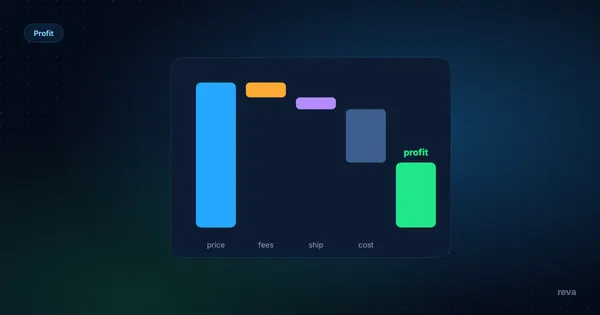
Work out what a flip really earns: cost of goods, marketplace and buyer fees, shipping, returns, promotions, ROI vs margin and tracking profit per item.
25 min read
Unregistered activity in Poland explained for resellers: the 10,813.50 zł quarterly cap, the 6-month rule for private items, PIT-36 and when to register.
8 min read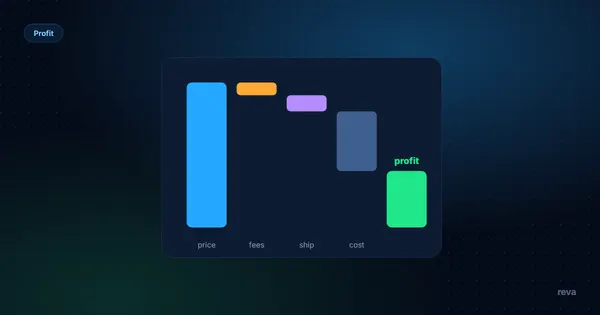
What DAC7 means for resellers on Vinted, OLX and Allegro: the 30-sales or €2,000 trigger, what platforms collect, blocked payouts, and why it isn't a tax.
8 min read