 reva
revaWhere to Find Vintage Clothing to Resell
Five real sources for vintage stock in Poland and nearby, what each one is good for, and which pieces to leave on the rail.
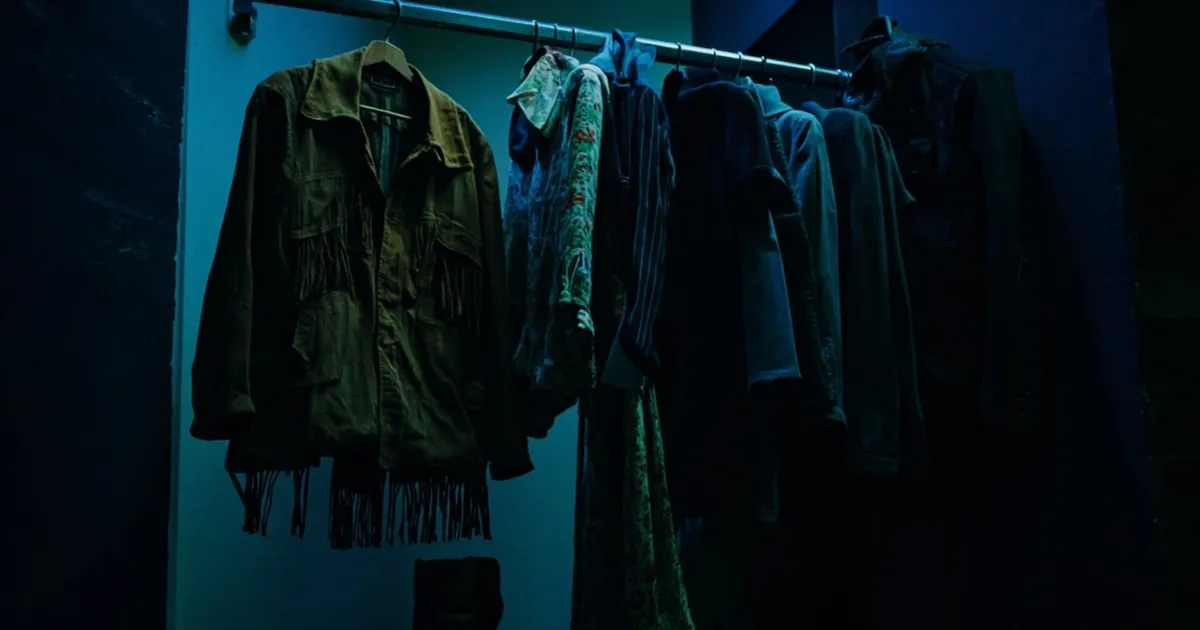
- Vintage sellers usually combine sources rather than relying on one: lumpeks for volume, flea markets for chosen pieces, house clearances for whole wardrobes, family wardrobes for free stock, and bales or charity shops for a specific era or size.
- Weight pricing favours light fabrics and penalises heavy knitwear — track your own find rate before committing to a lumpeks as a regular source.
- Age alone doesn't make a piece vintage or valuable; a platform's own definition (Etsy: at least 20 years) is a reference point, and label dating does the real work.
- Skip smells you can't fix, damage beyond simple repair, and branded pieces you can't authenticate — Vinted's rules forbid counterfeits, including handmade pieces that resemble a brand.
- reva's Scout module (LIVE) estimates fair value and fast-sell price once you have a specific piece in hand — it doesn't date labels or authenticate for you.
Vintage sellers rarely rely on a single source. They build a rotation — weight-priced shops for volume, flea markets for pieces they choose one at a time, a house clearance when a whole wardrobe comes up at once, a family closet that trickles in stock for free, and bales or charity shops when they're hunting a specific era or size run. Which mix works for you depends less on your city than on how much time you can spend sorting.
This page is a comparison of those five channels, part of the wider product sourcing guide. It doesn't cover how to date a label or price what you find, and it doesn't cover the day-to-day tactics of any one channel in depth; each section links to a dedicated guide for that.
What counts as vintage when you resell
"Vintage" gets used loosely, but platforms that sell it define it more narrowly. Etsy's vintage items policy (accessed 13 Sept 2026) sets a floor of at least 20 years old, and it explicitly rejects descriptions like "handed down" or "bought at an estate or yard sale" as proof of age — a seller has to be able to point to something more concrete than a story. The same policy requires deadstock sellers (unworn stock that never sold) to explain how they authenticated its age, not just assert it.
You don't have to follow Etsy's exact rule on Vinted, OLX or Allegro Lokalnie, but the logic transfers: a buyer who later asks "how do you know this is from the 1970s?" deserves a real answer. That answer usually comes from the label — care symbols, fibre-content wording and country-of-origin formats all changed over the decades in ways you can date — and dating labels properly is a skill of its own, covered in dating labels and pricing vintage clothing. Age by itself doesn't set value either; condition, brand recognition and how distinctive the design is all factor in alongside how old the piece actually is.
Lumpeks and weight-priced shops
Lumpeks and similar kilo shops sell mixed second-hand stock by weight rather than by the piece, which changes what's worth digging for. Say a shop charges the same price per kilo regardless of garment type, for example: a silk blouse that weighs 150 grams costs a fraction of a chunky wool sweater that weighs 600 grams, so the same budget buys you far more light pieces than heavy ones. That makes lumpeks a strong source for blouses, thin cotton shirts and scarves, and a weak one for coats and knitwear, where the per-piece math rarely works out unless the garment itself is unusually valuable.
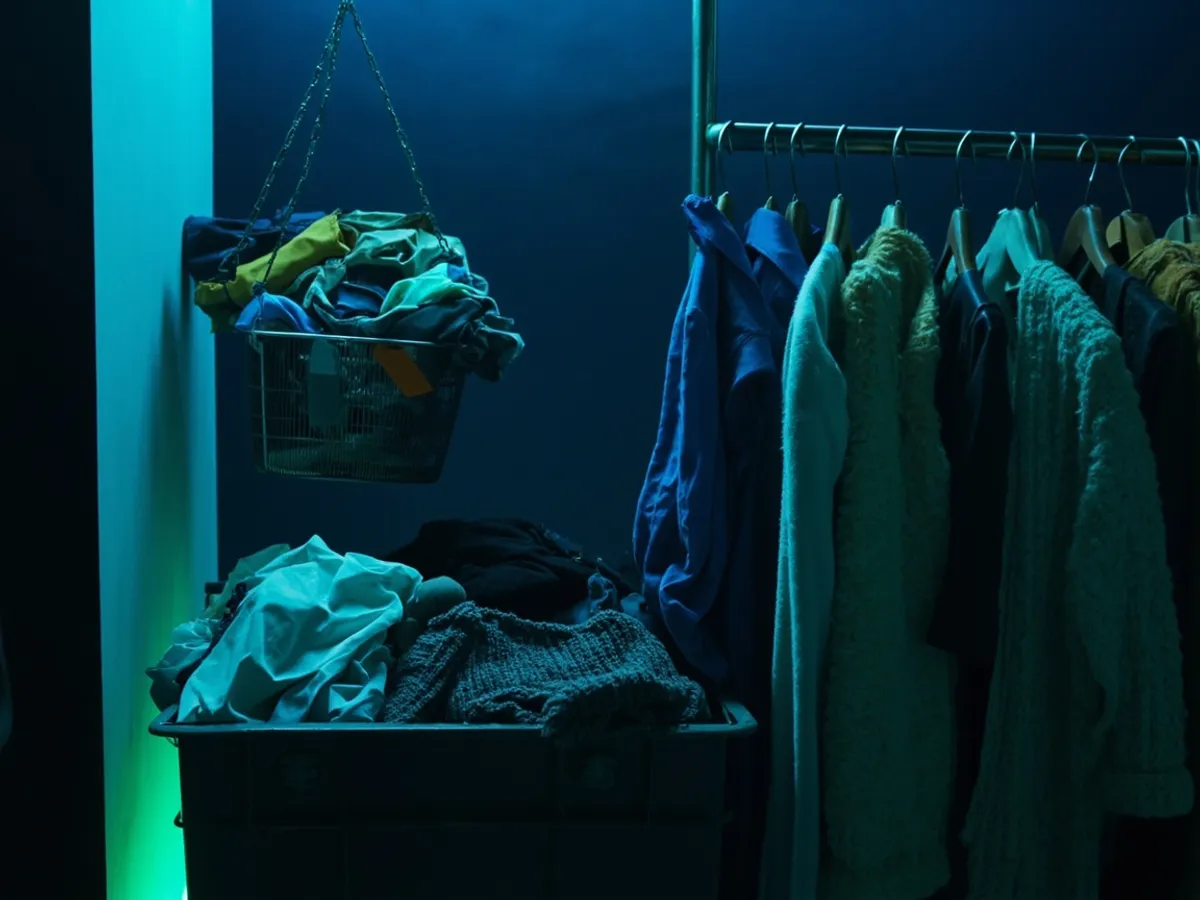
Stock turns over on set delivery days, and knowing when a shop restocks matters more than how often you visit — arriving right after a delivery beats arriving five times on ordinary days. The delivery-day tactics, plus how to sort a bin quickly without missing good pieces, are covered in lumpeks sourcing; this section only covers why weight pricing pushes you toward light fabrics.
Flea markets and giełdy staroci
At a flea market or giełda staroci, you're buying pieces one at a time, at a price a person sets on the spot rather than a scale — which flips the lumpeks calculus. A heavy vintage coat that would barely justify its weight at a lumpeks can be a good buy at a flea market stall if the seller doesn't know (or doesn't price for) its resale value. The tradeoff is time: you're evaluating and often negotiating on one item at a time, so the pace of finding stock is much slower than a weight-priced bin. The buying routine — what to bring, when to arrive, how to negotiate without insulting the seller — is its own guide: flea market flipping.
House clearances and estate lots
A house clearance or estate lot is the opposite of a flea market in one important way: you're often buying (or being given first access to) an entire wardrobe at once, not one piece. That can mean a strong run of a single era or a single person's taste, which is useful if you're trying to build a themed batch of listings, but it also means sorting through pieces that won't be worth listing alongside ones that will. House clearance sourcing covers how to find these opportunities and sort a full lot efficiently.
Family and friends' wardrobes
The slowest but cheapest source is what's already sitting in a relative's or friend's closet. It costs nothing to ask, but it comes with obligations a paid source doesn't: get clear consent before you list anything, agree on how proceeds are split (all yours, a percentage, or a flat thank-you) before you sell rather than after, and describe the piece as honestly as you would stock bought elsewhere — a family connection to an item is not a reason to skip disclosing its actual condition.
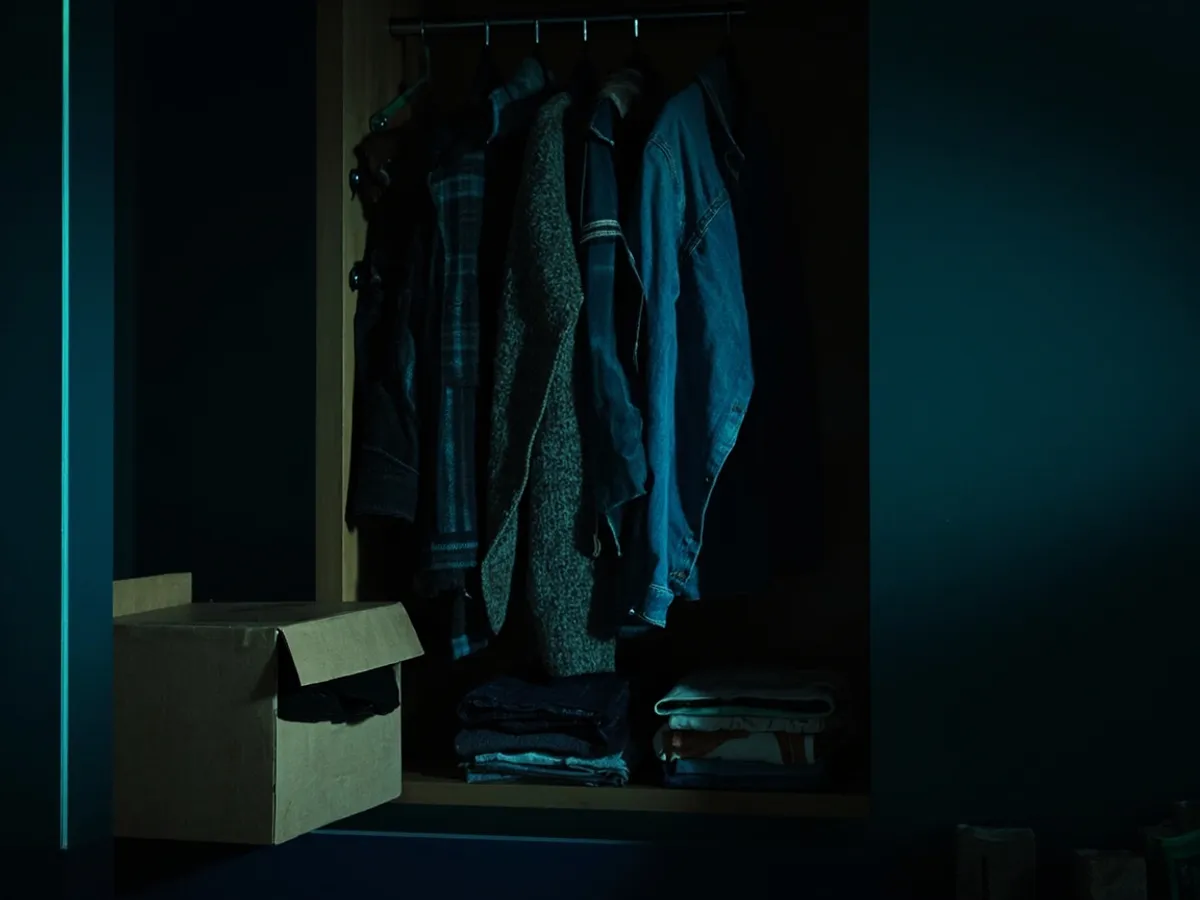
This source also tends to arrive in bursts rather than on a schedule — a spring clear-out, someone moving house — so it works best as a supplement to a steadier channel like lumpeks or bales, not a source you can plan a whole month of listings around.
What to skip: damage, smells, fakes and "vintage" that is just old
Some pieces cost more in time and returns than they're worth buying at all. Skip a garment with a smell you can't remove — smoke, damp, or mothballs worked into the fibres tend to survive a normal wash and follow the piece into a buyer's home. Skip damage beyond a simple, disclosed repair: a small reinforced seam is fine to describe and sell, but a structural tear or missing hardware you can't source usually isn't worth the listing time.
Skip anything branded you can't authenticate. Vinted's catalogue rules forbid counterfeit items outright, explicitly including "handmade items that resemble other brands" — so a convincing logo with no paperwork, no verifiable maker's mark, and no way to explain how you know it's genuine is a pass, not a bargain, regardless of how good a deal the price looks like. And resist calling something vintage just because it's old and unfashionable: an item with no distinguishing era, brand or design feature is secondhand, not vintage, and pricing it as vintage without being able to explain why sets up a dispute later. If a piece is unworn stock you're confident predates current lines, "deadstock" is the correct word for it — see deadstock for what does and doesn't qualify.
Once you've sorted candidate pieces from the skip pile, the next question is what a specific piece is actually worth. reva doesn't date labels or authenticate items for you, but Scout (LIVE) estimates fair value and a fast-sell price on Vinted, OLX and Allegro Lokalnie once you have a piece in hand — estimates, not guarantees.
Bales and charity shops compared
Clothing bales (bulk-bought, often by weight or by the unit, from a wholesaler rather than a shop floor) and charity shops sit at different points on the effort-versus-control spectrum. A bale gets you volume in one purchase but little control over exactly what's inside; a charity shop gives you piece-by-piece control but at a slower pace and often a higher per-item price than a bale.
| Lumpeks | Flea market | House clearance | Family wardrobe | Bales | Charity shop | |
|---|---|---|---|---|---|---|
| Effort per piece | YesLow | NoHigh | NoMedium | YesLow | YesLow | NoMedium-high |
| Find rate | PartlyTrack it yourself | PartlyTrack it yourself | PartlyTrack it yourself | PartlyTrack it yourself | PartlyTrack it yourself | PartlyTrack it yourself |
| Cost control | NoWeight sets price | YesNegotiable | PartlyLot price, mixed quality | YesFree or agreed split | NoBulk price, unseen contents | YesPriced per item |
| Fake risk | PartlyDepends on shop | PartlyDepends on seller | PartlyDepends on estate | YesKnown provenance | NoUnseen until opened | PartlyDepends on shop |
| Best for | YesLight fabrics, volume | YesChosen pieces, negotiation | YesWhole-era batches | YesFree stock, slow trickle | YesVolume for a size run | YesSpecific era or brand |
Neither find rate nor typical cost per piece has a reliable published figure across these channels — track your own numbers for a few weeks in each before deciding where to put your time. A simple way to do that: log every sourcing trip for a month, noting how many wearable, resellable pieces you found per hour spent.
Selling channel matters here too: Allegro Lokalnie charges 0 zł for a local listing and 7.9% on "Kup teraz" and auction-format sales, and business accounts can't sell there at all — a detail worth knowing before you plan a bale-sized batch around a specific platform.
- Match your sourcing mix to how much sorting time you have, not just what's nearby
- Weigh light fabrics against heavy ones before betting on a weight-priced shop
- Get consent and agree on a split before listing anything from a family or friend's wardrobe
- Track your own find rate for a few weeks before judging any single channel
- Skip smells you can't remove, damage beyond simple repair, and unauthenticated branded pieces
- Use "deadstock" only for unworn stock you can explain the age of, not as a synonym for old
For whether a bulk bale purchase pencils out, see are clothing bales worth it.
If you want to compare sourcing in charity shops specifically, charity shop sourcing covers that channel's own routine and etiquette in more depth.
Frequently asked questions
Where do vintage sellers find their stock?
Is buying vintage clothing by weight worth it?
How can I tell real vintage from old second-hand clothes?
What vintage pieces should I not buy for resale?
Sources
- Etsy: Vintage Items Policy checked 13 Sept 2026
- Vinted PL help: commercial-activity signals (article 1120) checked 13 Sept 2026
- Vinted catalogue rules (counterfeit ban) checked 13 Sept 2026
- Allegro: jakie są opłaty na Allegro Lokalnie checked 13 Sept 2026
See live opportunities
Scout shows finds priced below the level where similar items leave the market. Every price is an estimate you check before you buy.
reva estimates prices from public listings. Estimates, not guarantees.Keep reading

Where resellers find stock and how to judge it: online listings, second-hand shops, bales, alerts, buying rules, demand checks and fake detection.
25 min read
Charity shop reselling in the UK and Poland: the ethics debate, how to learn a shop's restock rhythm yourself, and checks to run before you pay at the till.
7 min read
Flea market flipping without guesswork: when to arrive, cash and haggling etiquette, a 60-second phone lookup at the stall and a max-buy rule you set at home.
7 min read