 reva
revaHow to Tell if an Item Is Overpriced
Price is a claim; the market's response is the evidence.
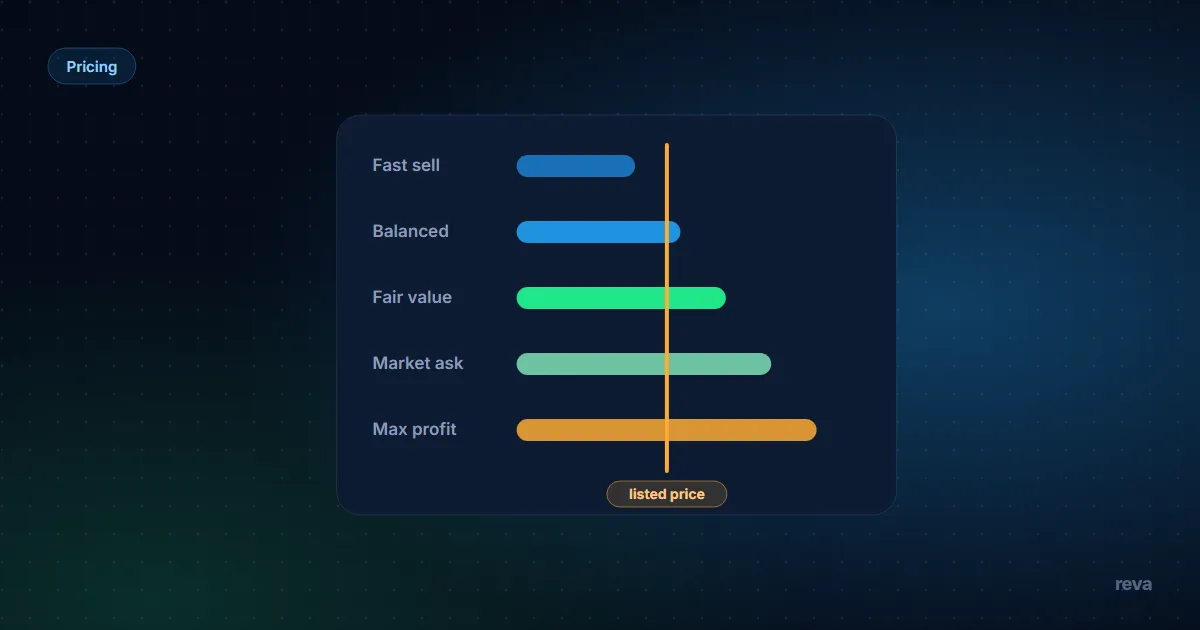
- Overpriced is a claim about outcomes: an ask above every comparable that left the market is the core signal, not a hunch.
- Build the reference from matched items — model, size, condition, same platform — and read the median ask, not the cheapest listing.
- Favourites without offers point at price; views without favourites point at title, first photo or description.
- Listing age is evidence and a penalty: Vinted's ranking counts 'how long ago the item was uploaded' among its attributes (checked 13 Sept 2026).
- Change one thing per review — price, or photos, or title — or you will never know what worked.
- Overpriced compared to what: picking the right reference
- Live asks vs items that left the market
- Listing age and what it can and cannot prove
- Market response: views, favourites, offers as evidence
- The two-minute overpriced check: a checklist
- Deciding: cut the price, change the listing, or wait
- Related guides
An item is overpriced when its asking price sits above what comparable items actually achieve — the ones that left the market — while buyers respond to yours with views and favourites but no offers. So the question of how to know if an item is overpriced comes down to two evidence streams: what matched comparables are asking, and how the market reacts to your listing. This page turns both into a check you can run in about two minutes, plus the decision that follows: cut the price, improve the listing, or wait.
Marketplace mechanics quoted here were checked on 13 September 2026. Every price and view count below is a worked example.
Overpriced compared to what: picking the right reference
Overpriced always means overpriced against something. The something has to be:
- the same item class — model, size, colourway, material, not a similar vibe;
- the same condition band — new-with-tags asks tell you nothing about a stained one;
- the same platform and market — a pickup-only local classified and a shipped-clothing app are different markets;
- recent — asks from months ago describe a market that no longer exists.
Then take the median of the matched asks, not the cheapest. Say you are selling used Nike sneakers, size 42, worn twice. Eight live asks on your platform read: 180, 190, 200, 210, 220, 240, 260 and 300 zł. The median ask is 215 zł. The 300 zł listing has been up for weeks with zero engagement; the 180 zł pair is scuffed in worse condition. Neither is your reference. 215 zł is.
Live asks vs items that left the market
Asks are intentions. A seller asking 300 zł has not sold anything at 300 zł. The prices that carry evidence are the ones at which comparable items left the market — sold, collected, or simply gone, since a vanished listing is not proof of a sale either.
Keep a simple exit log: open your comparables once a day, note which have disappeared, and write down their last asks. In the sneaker example, three leave the market over the following fortnight at 175, 185 and 190 zł. Now you have a second, better number. The exits cluster below the median ask, which is normal: buyers haggle, and sharp-priced items move first.
At a 240 zł ask, the sneakers sit above all three exits and 25 zł above the median ask. That is the overpriced case — even though the ask is below two of the eight live listings. Collecting that exit evidence is the core of finding sold comparables, and what Vinted shows about sold prices covers what you can and cannot see directly there. Where the levels should sit relative to each other, from fast sell to max profit, is the price ladder method.
Listing age and what it can and cannot prove
An old listing is weak evidence on its own. It may be off-season, miscategorised, pickup-only in the wrong city, or photographed on a messy floor. But age is also a mechanism, not just a symptom: Vinted's Our platform page (§8, checked 13 September 2026) lists "how long ago the item was uploaded" among the attributes that affect ranking, next to price and brand. A stale listing gets shown less, which means fewer views, fewer favourites and fewer chances of an offer. Age compounds.
A workable rule: when your listing has been live for about one and a half times your usual days to sell in the category, and comparables have been leaving the market inside that window, the price read is probably right. If your last three jackets moved within two weeks and this one is at day 21 with favourites but no offers, the ask is the suspect.
What not to do: delete and re-list to reset the clock. Vinted's terms restrict repeated re-listing of the same item, and on OLX a relist within 14 days counts as a duplicate in free and limited categories. When to lower a price walks through those rules and the schedule that replaces them.
Market response: views, favourites, offers as evidence
The market's answers arrive in a fixed order, and each stage names a different suspect:
- Views, no favourites. Buyers reach the listing and pass immediately. The title, first photo or condition line failed; the price was never really seen.
- Favourites, no offers. Buyers saved it, compared, and walked. This is the price-hesitation pattern — the strongest overpriced signal you can get without a message.
- Offers below your ask. Negotiation, not rejection. A 40 zł offer on a 120 zł listing is information about one buyer's budget, not a verdict on the item.
Example: your sneakers ran 14 days at 240 zł and collected 310 views, 12 favourites and no offers, while cheaper comparables disappeared around you. Views are fine, favourites are thin — the gap between 310 and 12 points at price and first photo, not at reach. On Vinted the loop also closes mechanically: search "ranks the listings based on relevance to the query and to you… item attractiveness, query relevance, and your historical interactions", so weak engagement feeds back into visibility (Vinted help page, checked 13 September 2026).
The two-minute overpriced check: a checklist
- 1Pull 6–10 matched comparablesSame model, size and condition, on the same platform. Note each ask.
- 2Split asks from exitsThe median matched ask is your reference. Note which comparables left the market, and at what price.
- 3Place your askAbove every exit and clearly above the median: overpriced candidate. Inside the exit range: not a price problem.
- 4Read the stall pointViews without favourites → title and first photo. Favourites without offers → price.
- 5Check the calendarAn off-season or post-holiday lull can explain a slow category on its own.
- 6Change one thingCut one price level, or fix the photo — never both in the same review.
Two judgement calls sit around the flow:
- Thin comparables. Fewer than five matched listings, or none for weeks, means the market is too quiet to prove anything from prices. How to check resale demand gives the demand checks that still work when prices can't.
- Mixed condition. If your matched set spans new-with-tags to stained, split it into two sets before reading the median. One mixed median tells you nothing.
The fuller method these checks feed into — building the levels, judging how much you trust your comparables, deciding when an estimate is too shaky to act on — is the resale pricing guide.
Deciding: cut the price, change the listing, or wait
Three outcomes, one rule each:
- Views high, favourites low → the listing, not the market. Re-shoot the first photo on a clean background, fix the title, put the flaw in writing. Give it one review cycle before touching the price.
- Favourites steady, no offers → the price. Cut one level, not a round percentage, and set the next review date now. The step-down schedule and the floor arithmetic are in when to lower a price.
- Exits have dried up — season ended, demand moved → wait or move the item. A correct price in a silent market still doesn't sell, and that is a channel decision, not a markdown.
The same check runs in reverse before you buy. Say a used drill is listed at 40 € and three comparable drills left the market at 45–55 € in the last month. The ask is below every observed exit: underpriced against outcomes, which makes it a buy candidate rather than a bargain trap. Watching that gap is the whole discipline — price against the market, then let the market confirm.
Related guides
Frequently asked questions
How long before I should admit my price is too high?
Does a listing with lots of views but no sales mean it is overpriced?
Should I compare my price to the cheapest listing?
Can an item be overpriced on one platform and fairly priced on another?
Sources
- Vinted UK: Our platform (ranking factors, §8) checked 13 Sept 2026
- Vinted UK Help: Recommended content on Vinted checked 13 Sept 2026
Analyze an item with reva
Open any find and see its five-level price ladder, demand score and price confidence, built from comparable items that left the market. Estimates, not guarantees.
reva estimates prices from public listings. Estimates, not guarantees.Keep reading

How to price used items for resale: comps from sold and live listings, condition, price levels from fast sale to max profit, markdowns, offers and bundles.
21 min read
A markdown schedule for listings that aren't selling: when to cut, by how much, when to stop, and how to tell a price problem from a visibility problem.
8 min read
Check resale demand before you buy: live competition, favourite speed, how fast similar listings leave the market and liquidity vs margin, no sold filter.
9 min read